
• BACKGROUND
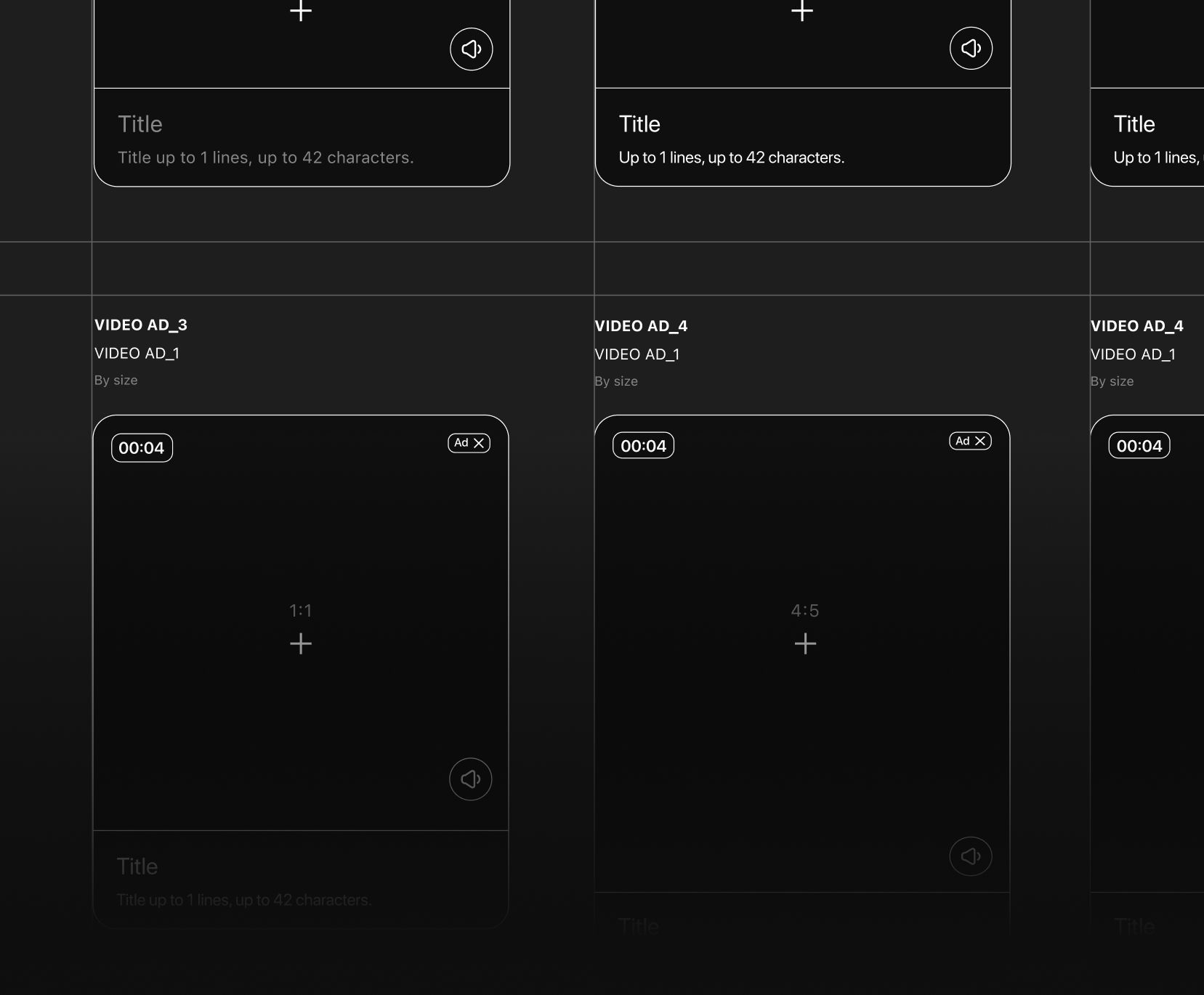
Integrate dynamic video ads into the user lifecycle with minimal friction.
By Q3 2024, competitors launched video ad capabilities, while our advertisers increasingly demanded premium video placements within the core user journey.
Launched for Beta Testing: December 2024
Design Scope
Key Outputs
• Opportunities Area
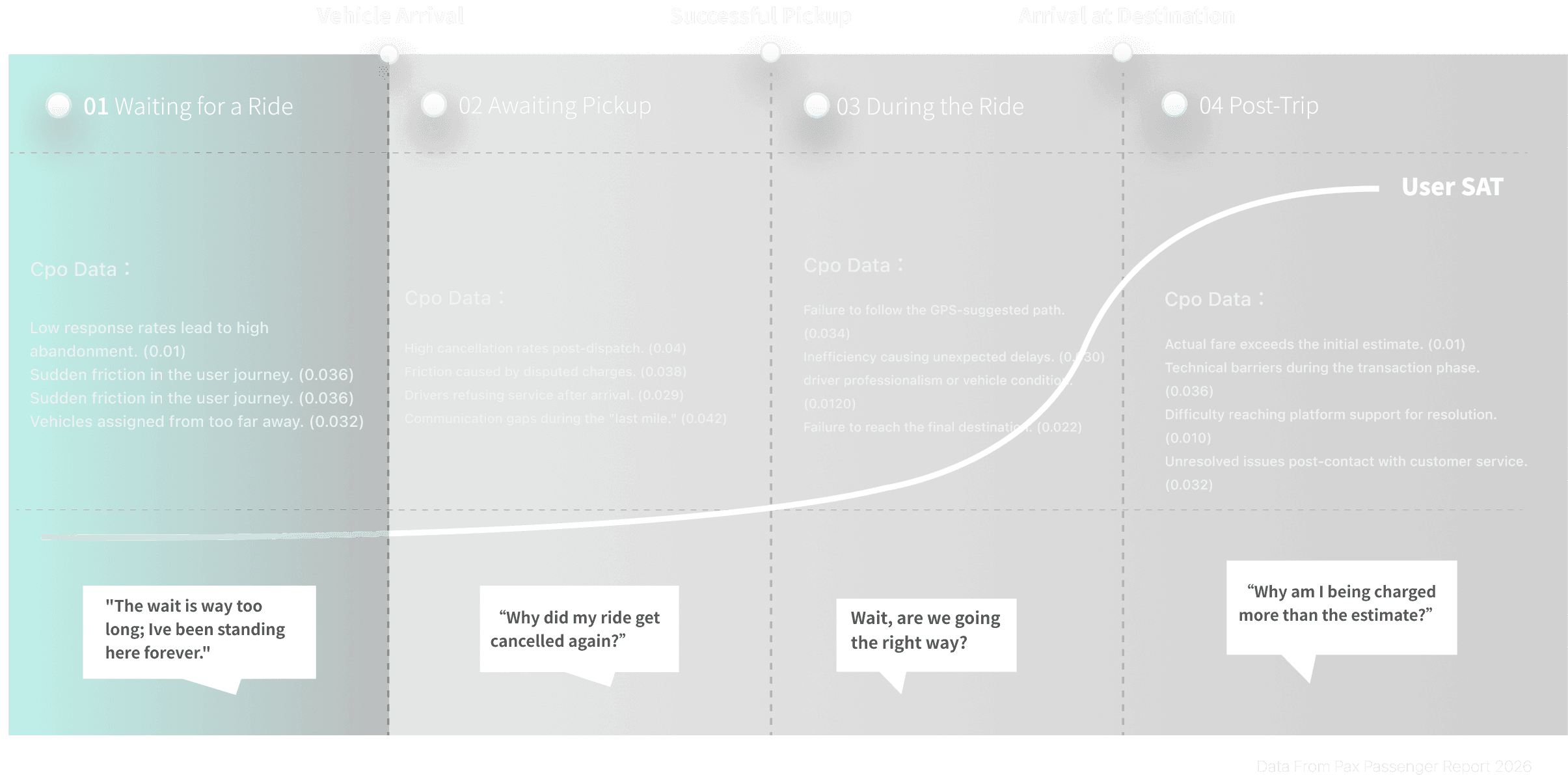
From Anxiety to Engagement: Redefining Emotional Gaps in Transit
According to the June 2024 User Research Report, experience scores across the journey stages were 791 (Pre-trip), 742 (In-trip), and 794 (Post-trip). Analysis revealed a significant "Anxiety Gap" between requesting and pickup, where users often complained about driver distance
• Team Alignment
Design Requirement
In collaboration with the Product and Engineering teams, we established four core design principles: Format Inclusivity, User Control, Contextual Integration, and Visual Consistency & Componentization.
Format Inclusivity
User Control
Contextual Integration
Visual Consistency & Componentization
• Desk Research
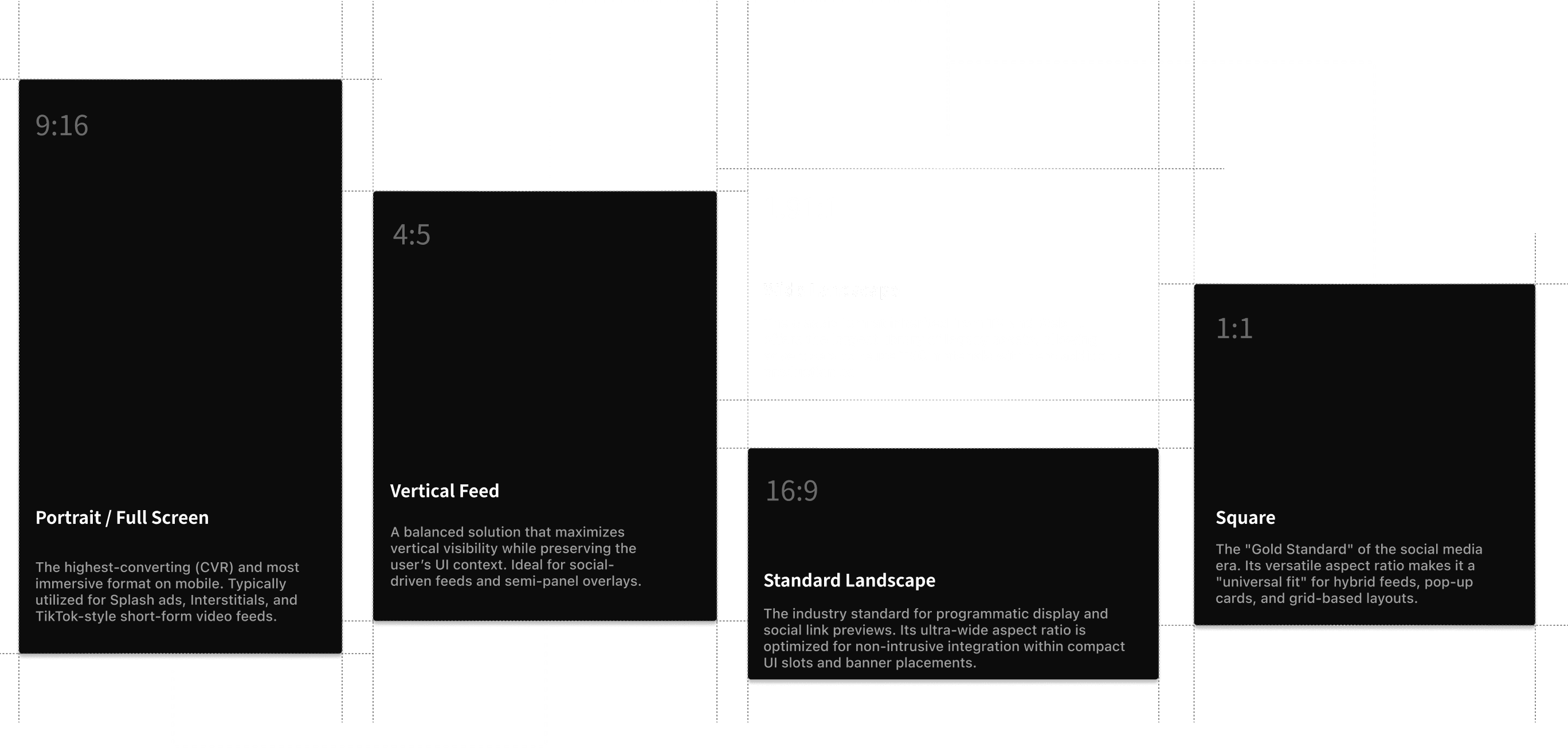
Industry Standards & Native Adaptation
In collaboration with the Product and Engineering teams, established four core design principles: Format Inclusivity, User Control, Contextual Integration, and Visual Consistency & Componentization.
• Design
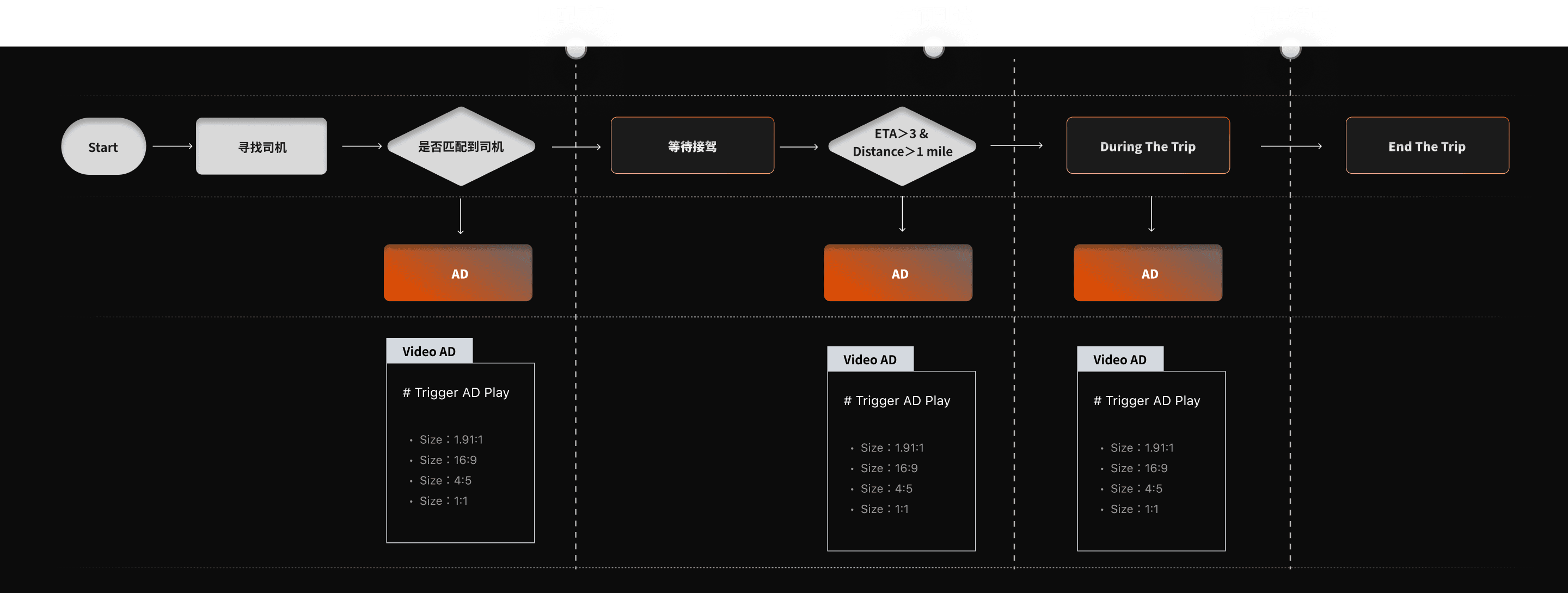
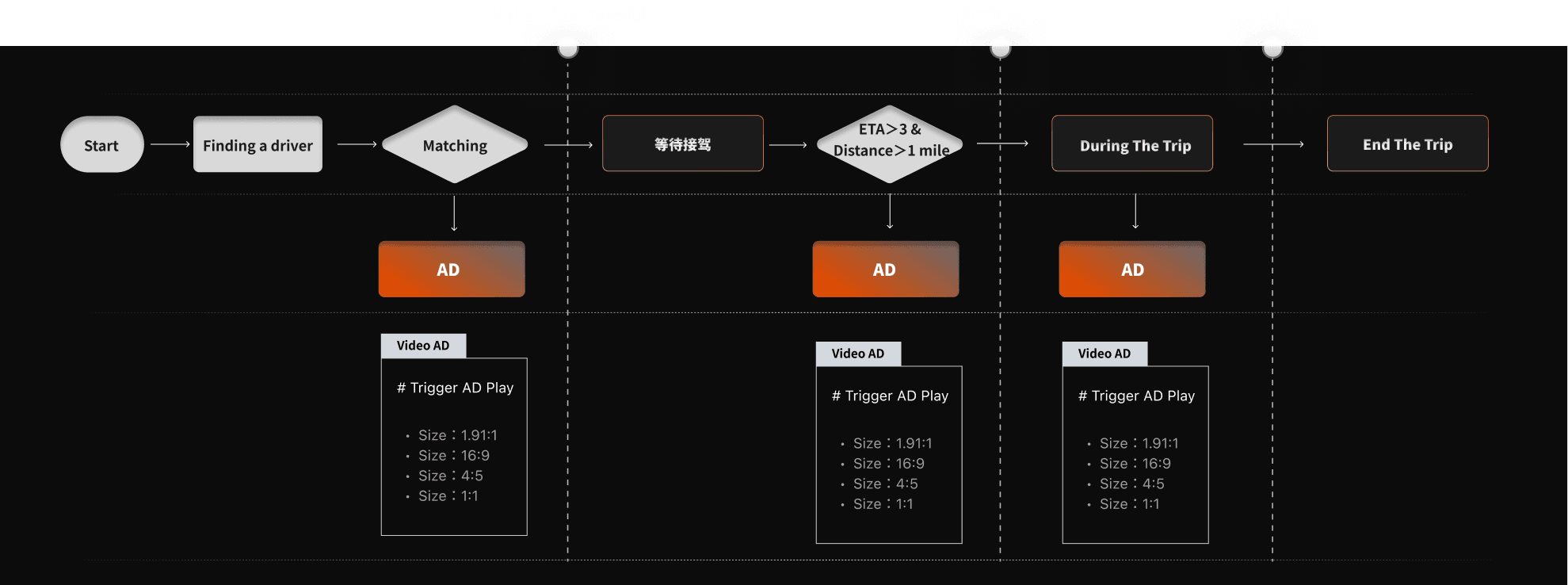
User Touchpoints & Flow Mapping
We identified this "Anxiety Gap" as a strategic opportunity for video ads, leveraging engaging content to redirect user attention and mitigate wait-time anxiety.
• Application
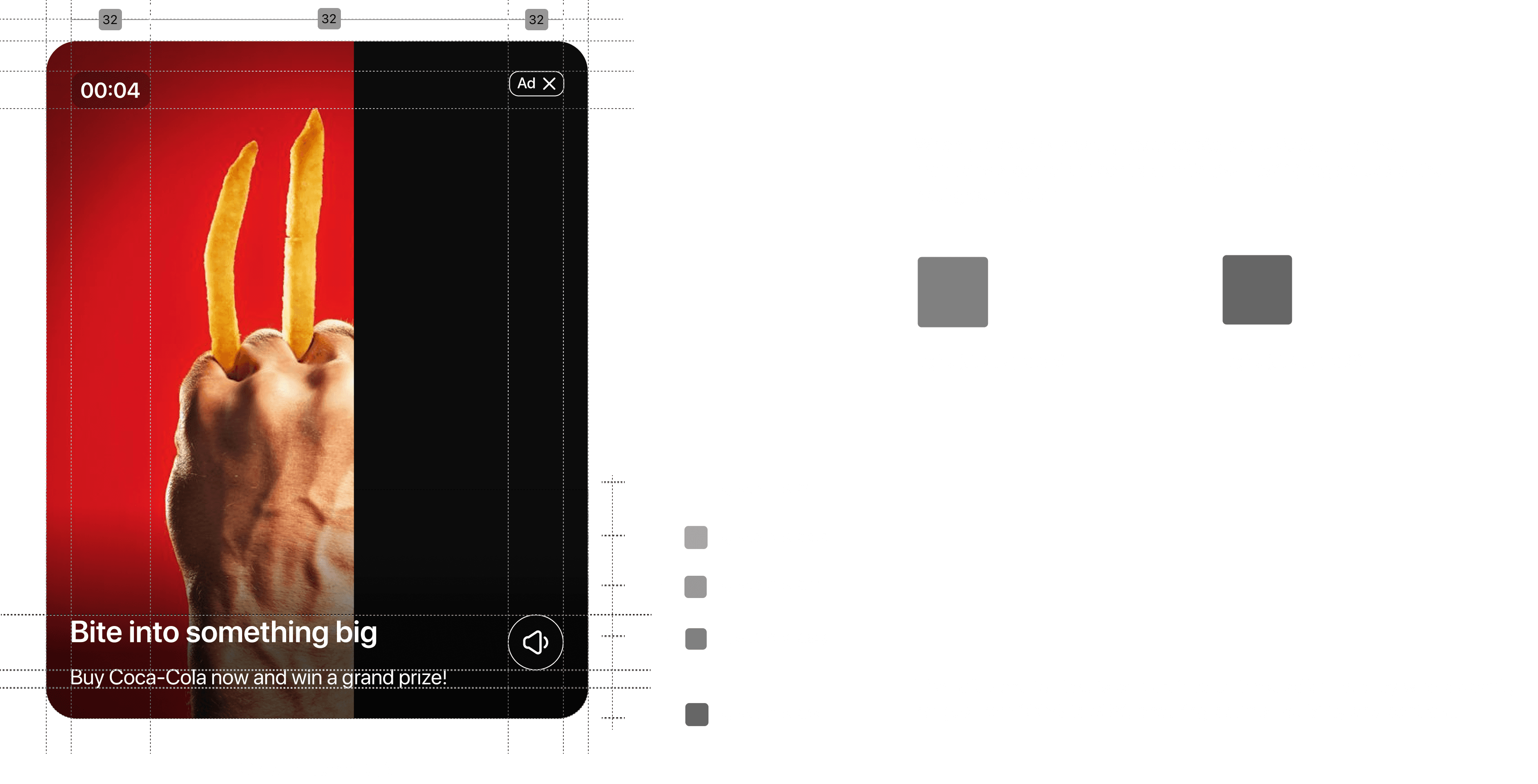
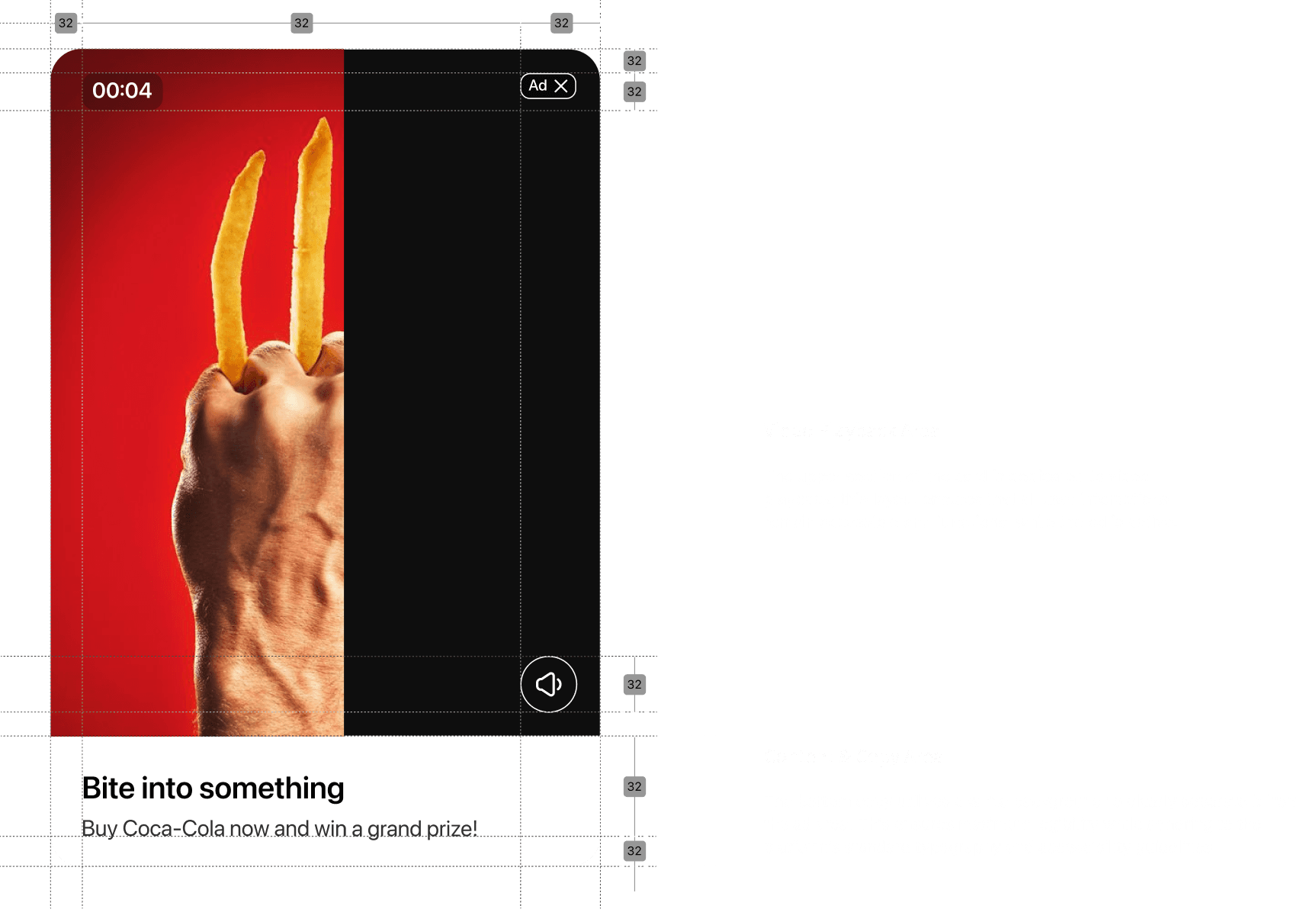
Component Architecture & Adaptability
Step 01: Waiting for Response
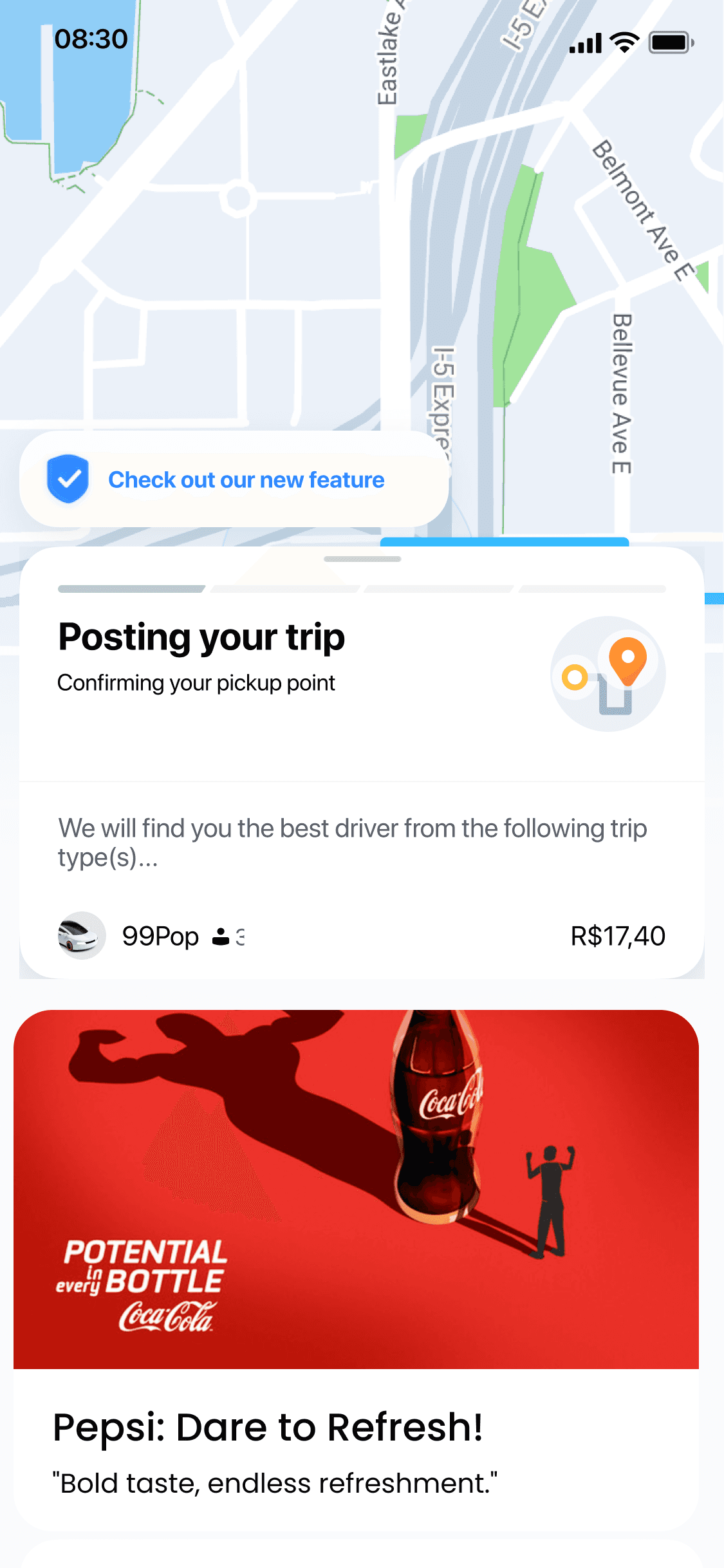
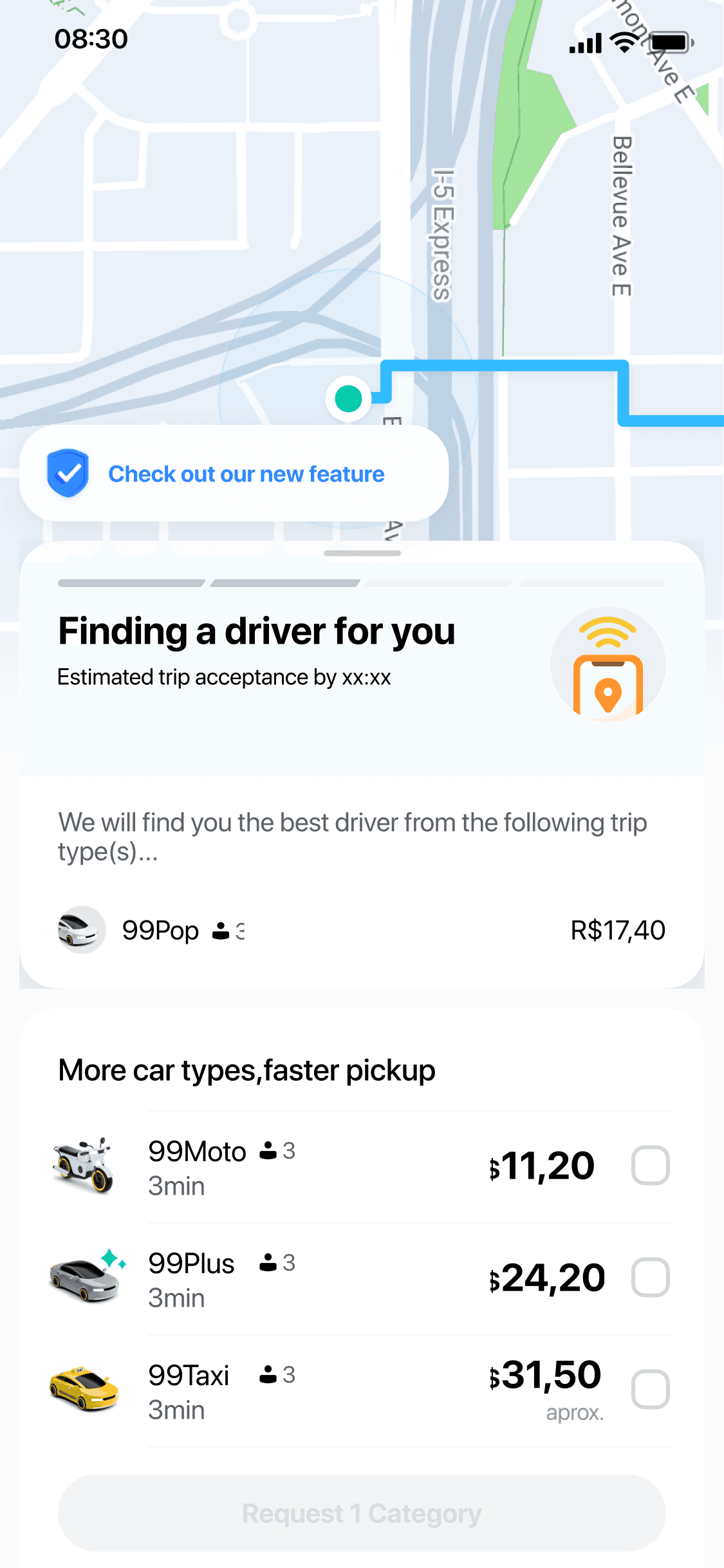
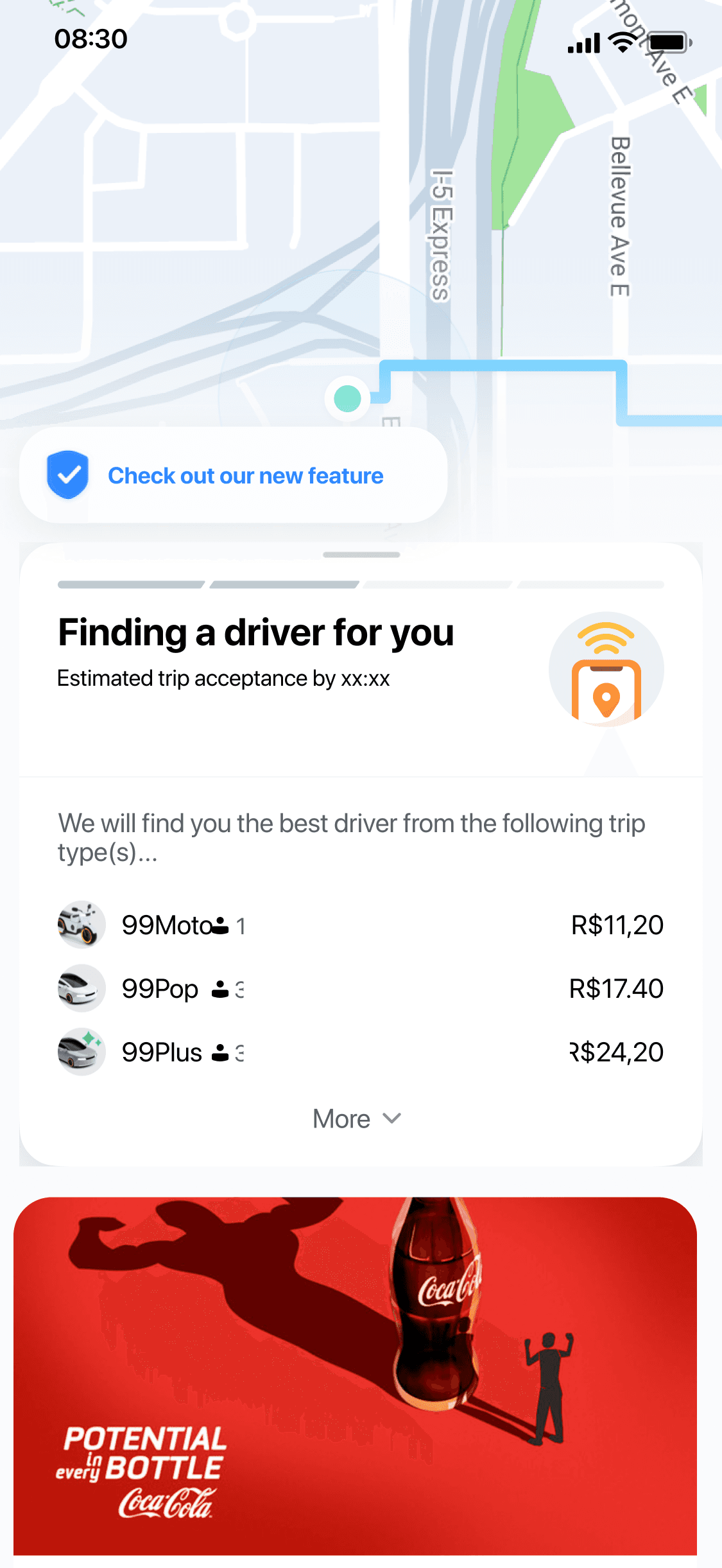
This stage covers the window between placing an order and successful dispatch. During this phase, user interaction is concentrated on the bottom half of the screen—specifically for selecting additional vehicle types—resulting in low engagement with the map area.
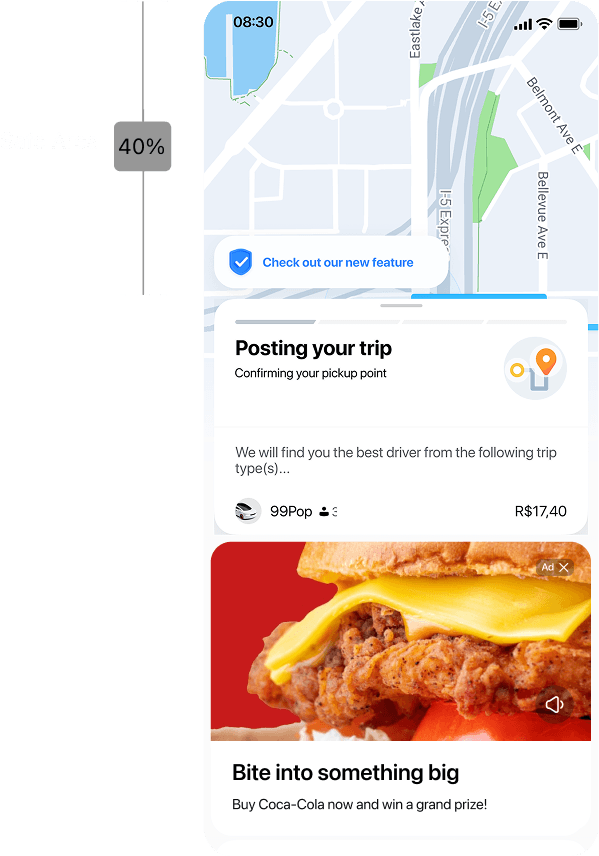
Order Placement
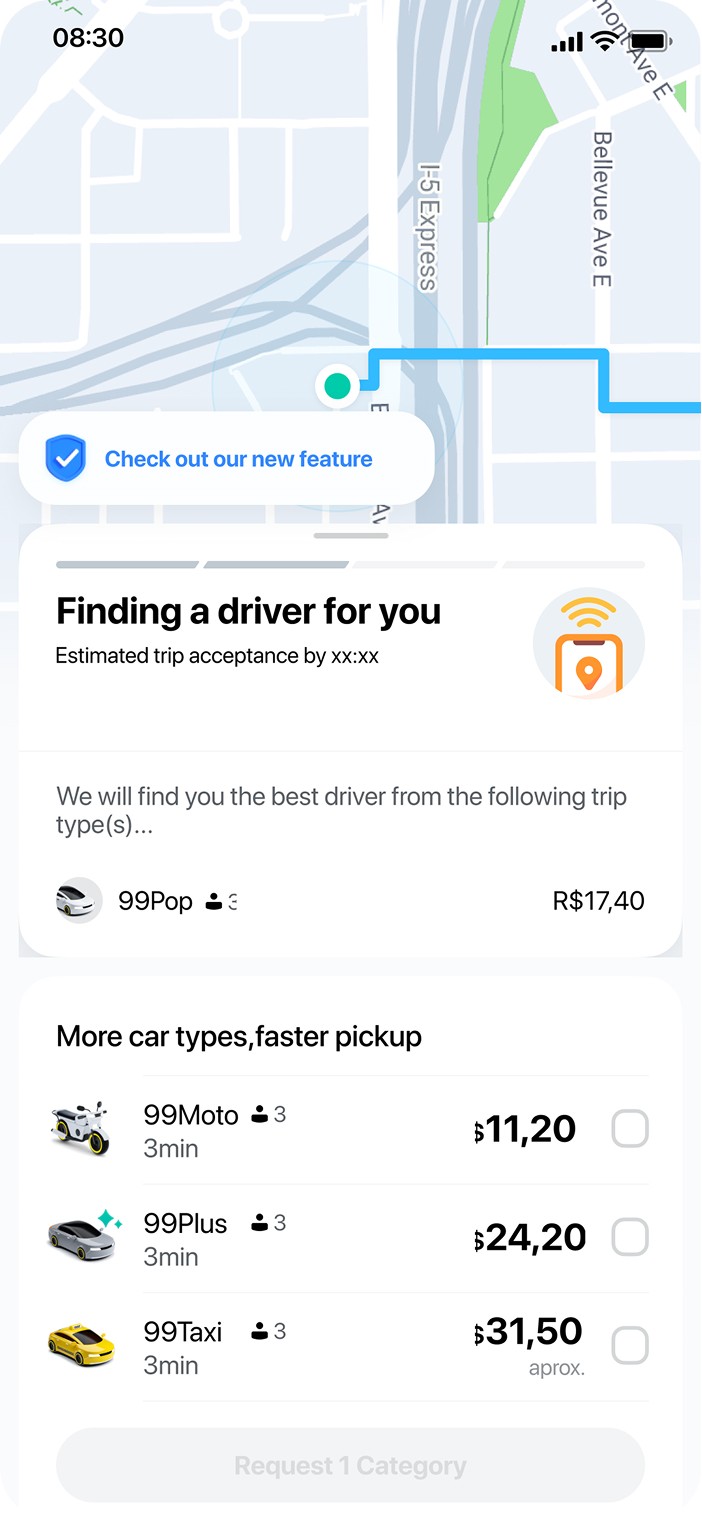
Awaiting Response
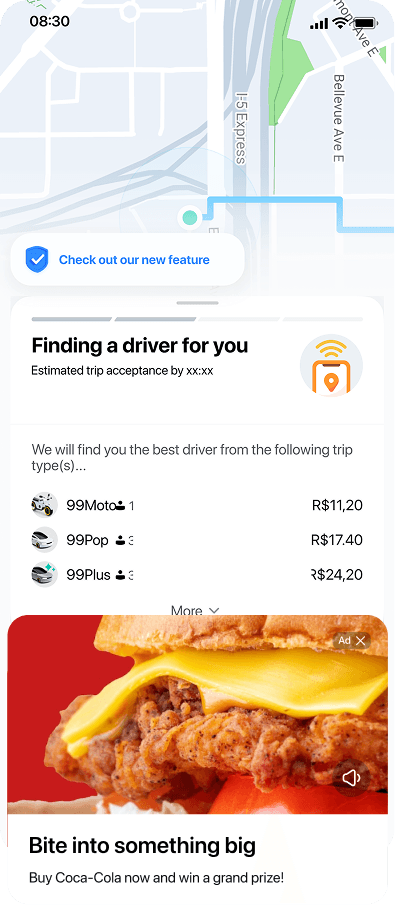
Vehicle Types Added
Step02:Waiting for Response
This stage covers the interval from order placement to successful dispatch. User focus is primarily centered on the lower half of the screen for selecting additional vehicle types, making the map area a secondary priority during this phase.
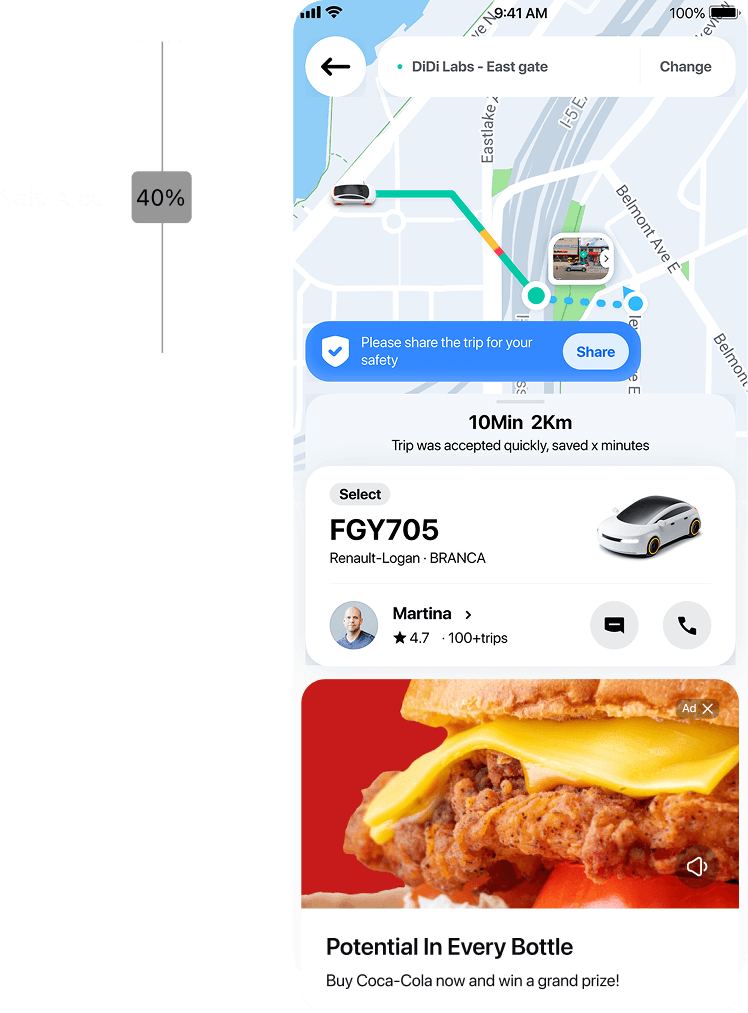
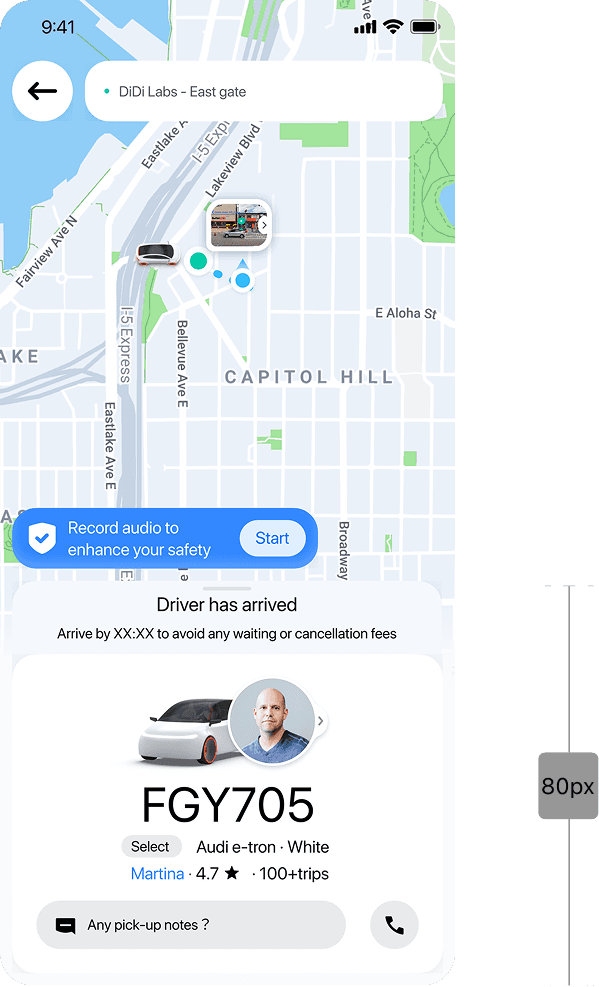
Arriving Soon
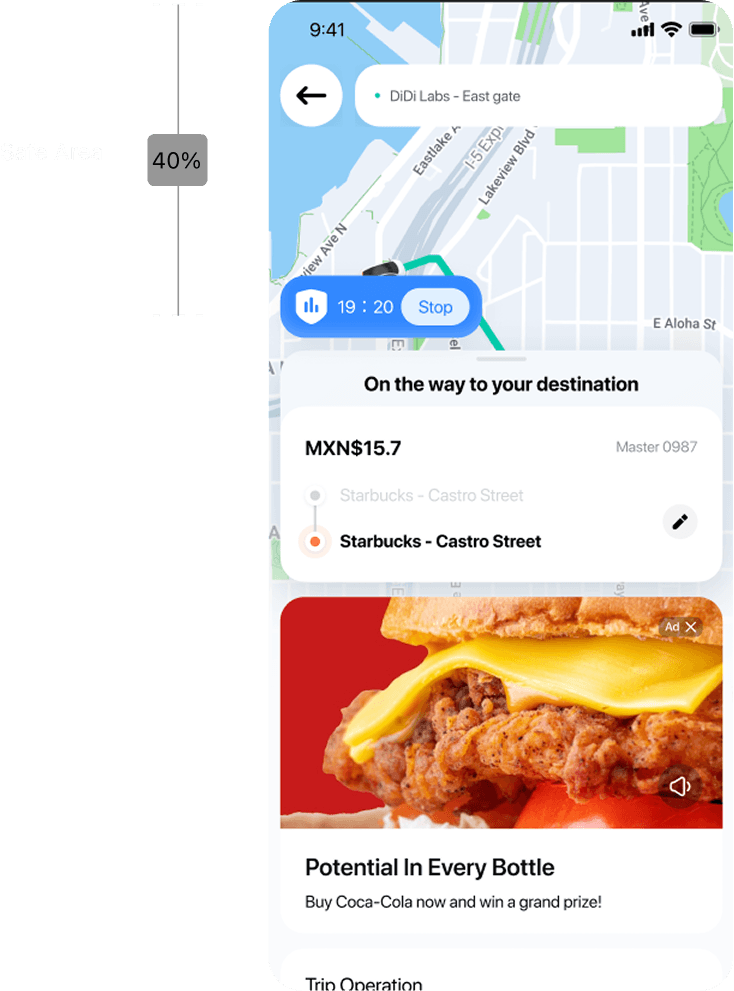
After accepting the order, the driver begins heading toward the pickup point. Since users need to monitor the driver’s real-time location, the layout ensures 40% map visibility to maintain situational awareness.
En Route
Step 03: End of Trip
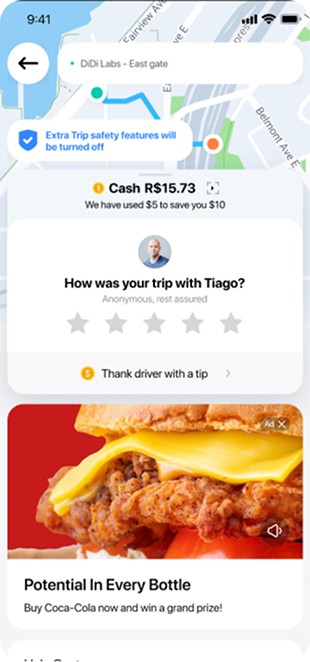
During these two trip stages, the user's need for map visibility persists; however, by the End of Trip, map engagement drops to near zero.
In-trip
Users may monitor the map for real-time traffic updates, especially during congestion. To accommodate this, the layout maintains 35% map visibility.
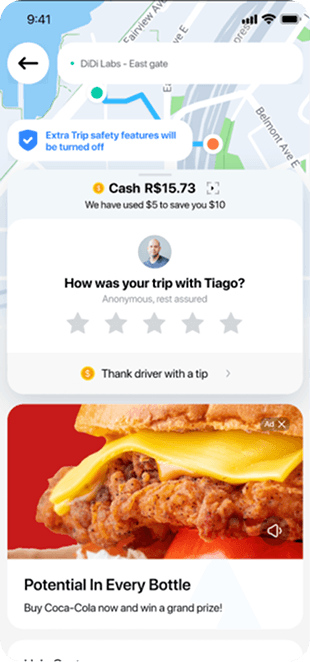
End of Trip
As the user’s need for the map drops to near zero at this stage, map visibility is reduced to 25% (ensuring no interference with core operations).
• FInal Deliverable
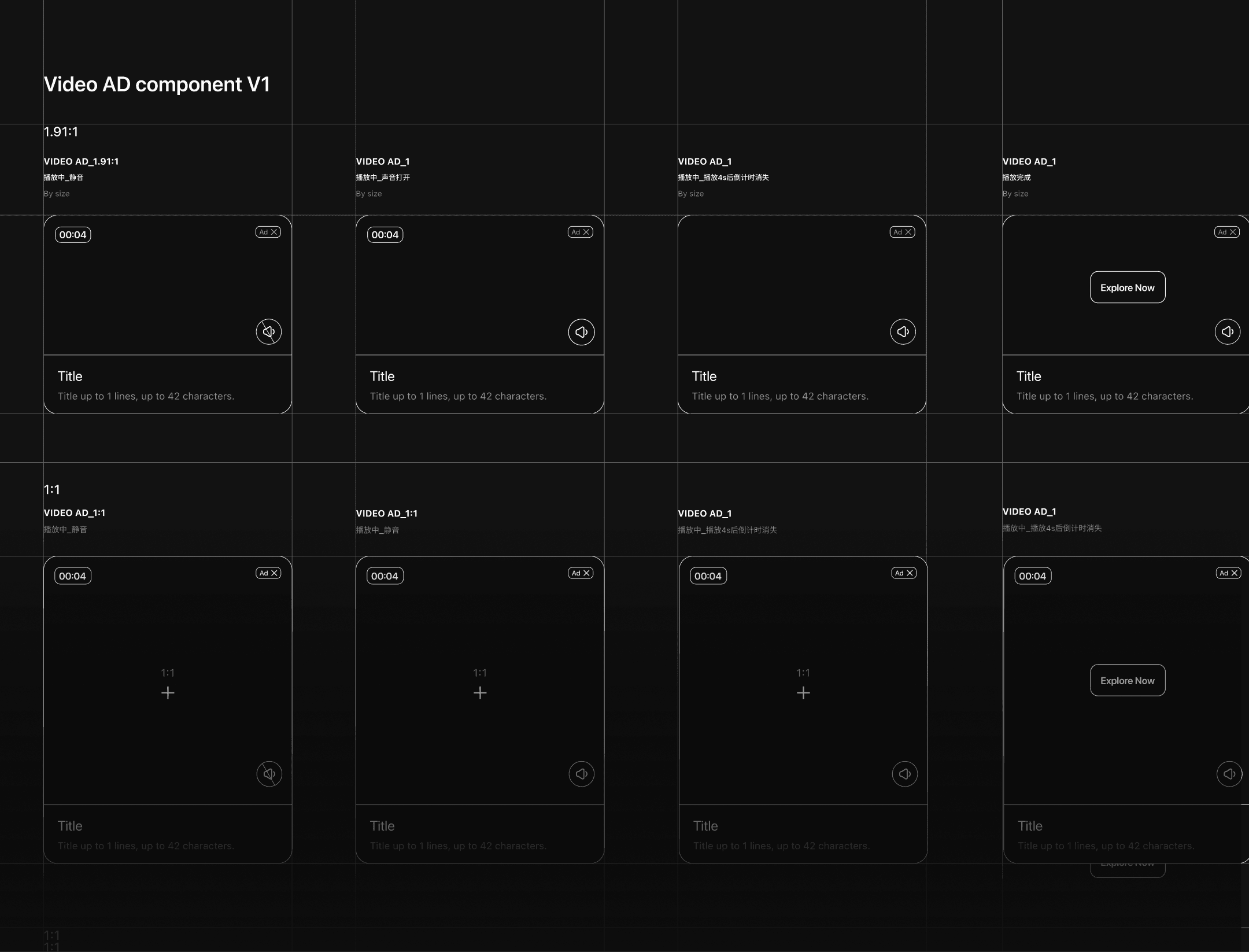
Video Ad Design Specifications V1.0
The final output is the inaugural version of the video advertising guidelines for DiDi’s International Mobility Business.
• Learning
I never expected that the memories of these past six months would carry such profound weight in my life.
Overall, this was an amazing internship and I couldn't have asked for it to have gone better. I will cherish the memories I made forever!