Amap
Role
Duration
Team
MY IMPACTS

Background
Restructuring Information to Restore User Control in Transit
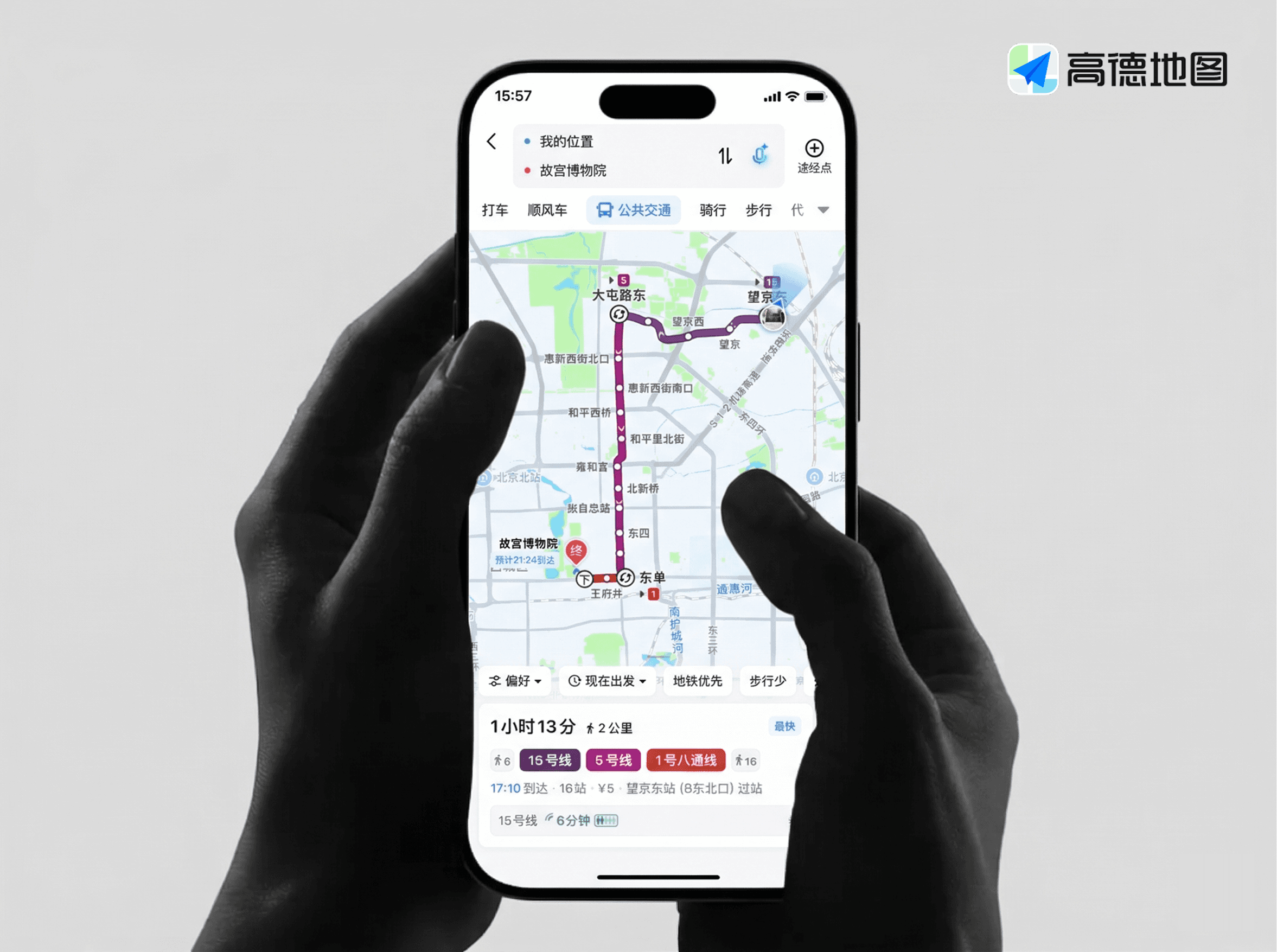
This project aims to eliminate anxiety across the end-to-end transit journey. By redesigning decision logic on list pages, setting clear expectations on detail pages, and ensuring seamless in-trip updates, we rebuild user certainty and deliver a closed-loop experience.


Launched for Beta Testing: December 2024
Design Scope
3+ mainflow
Public transport satisfaction rose by
36.2%
Context
High User Dissatisfaction with Current Transit Flow
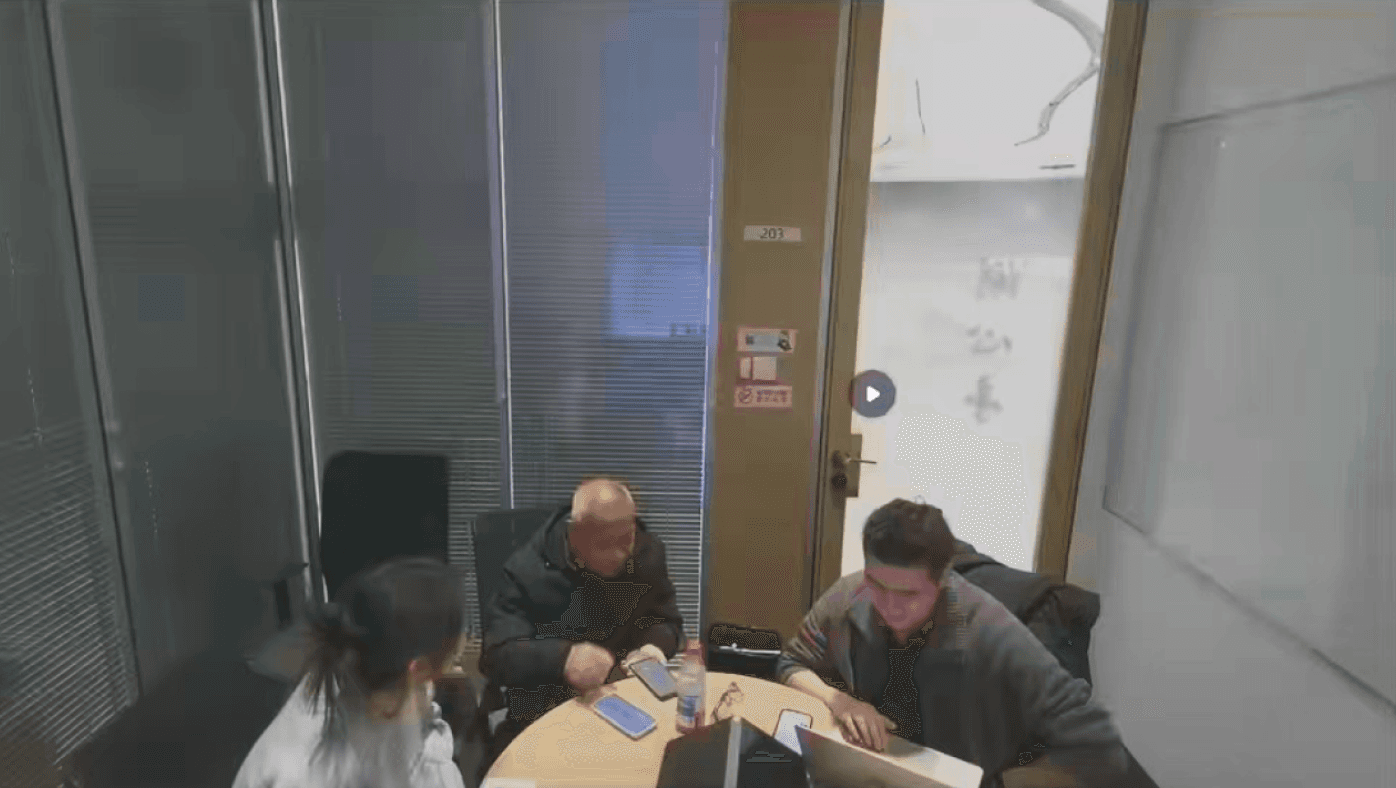
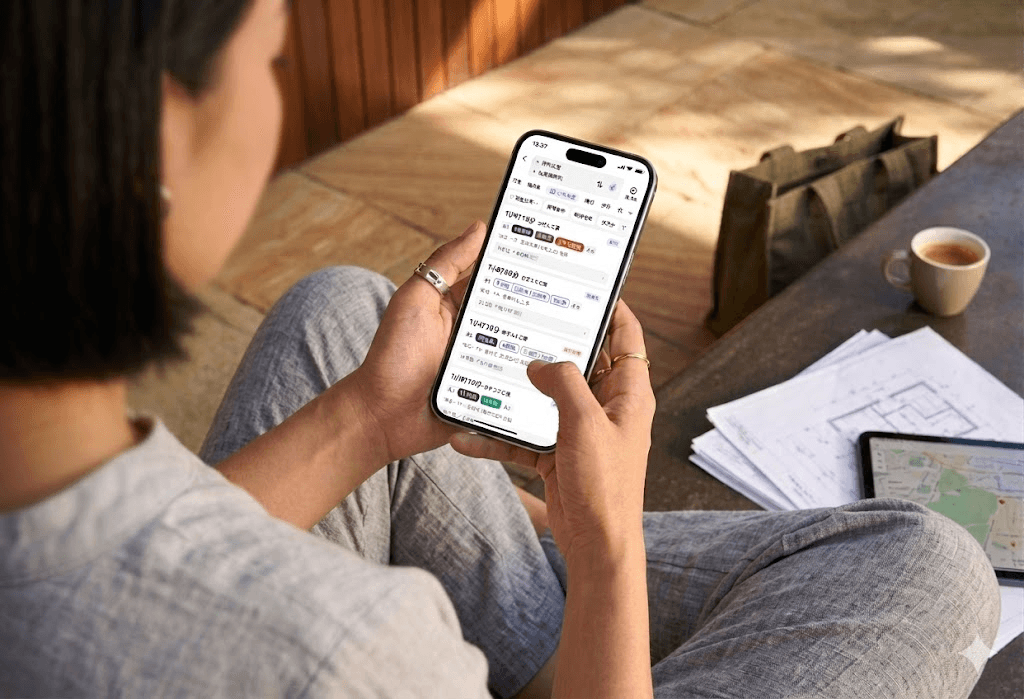
October research revealed our platform lags behind competitors in visual clarity (-8%) and layout rationality (-5%). This gap widens significantly in bus and subway scenarios, where clarity drops by 14% and rationality by 18%.
Why Design
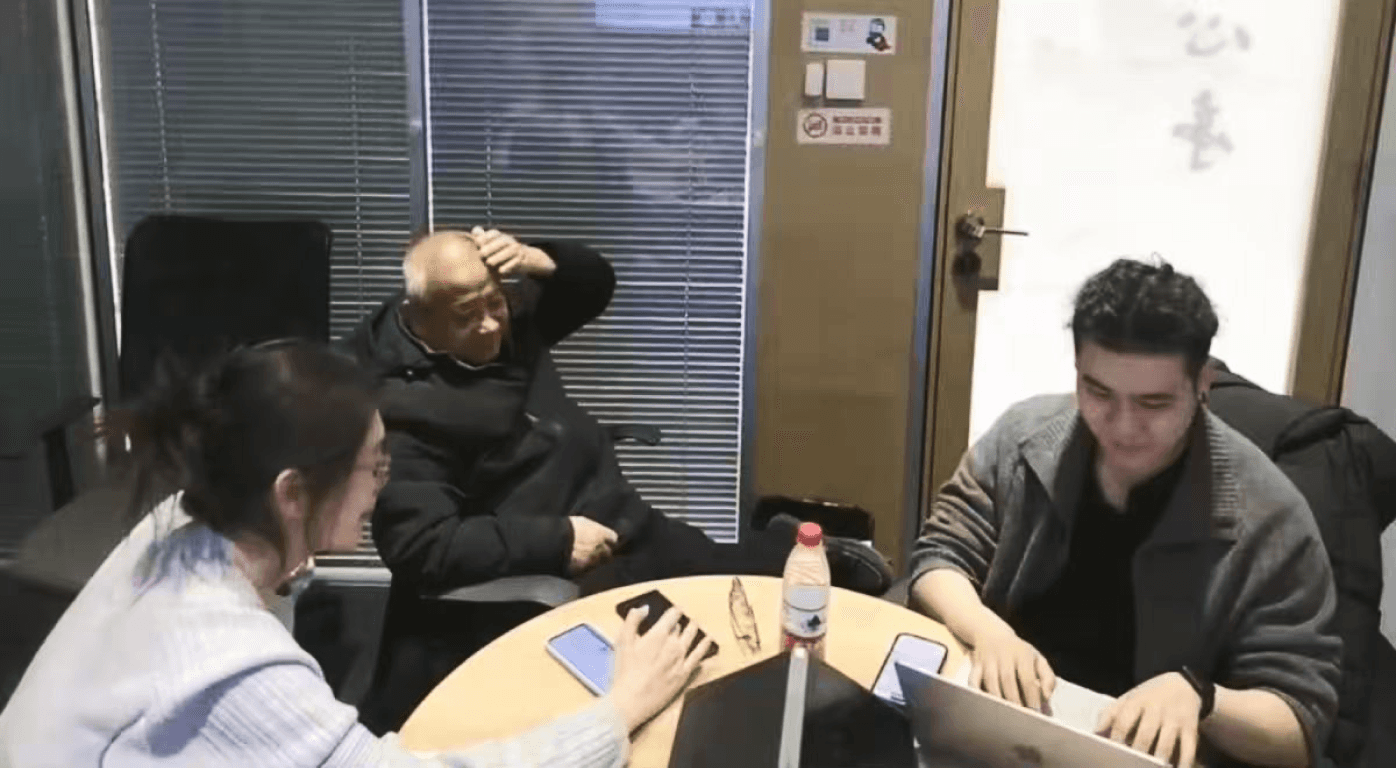
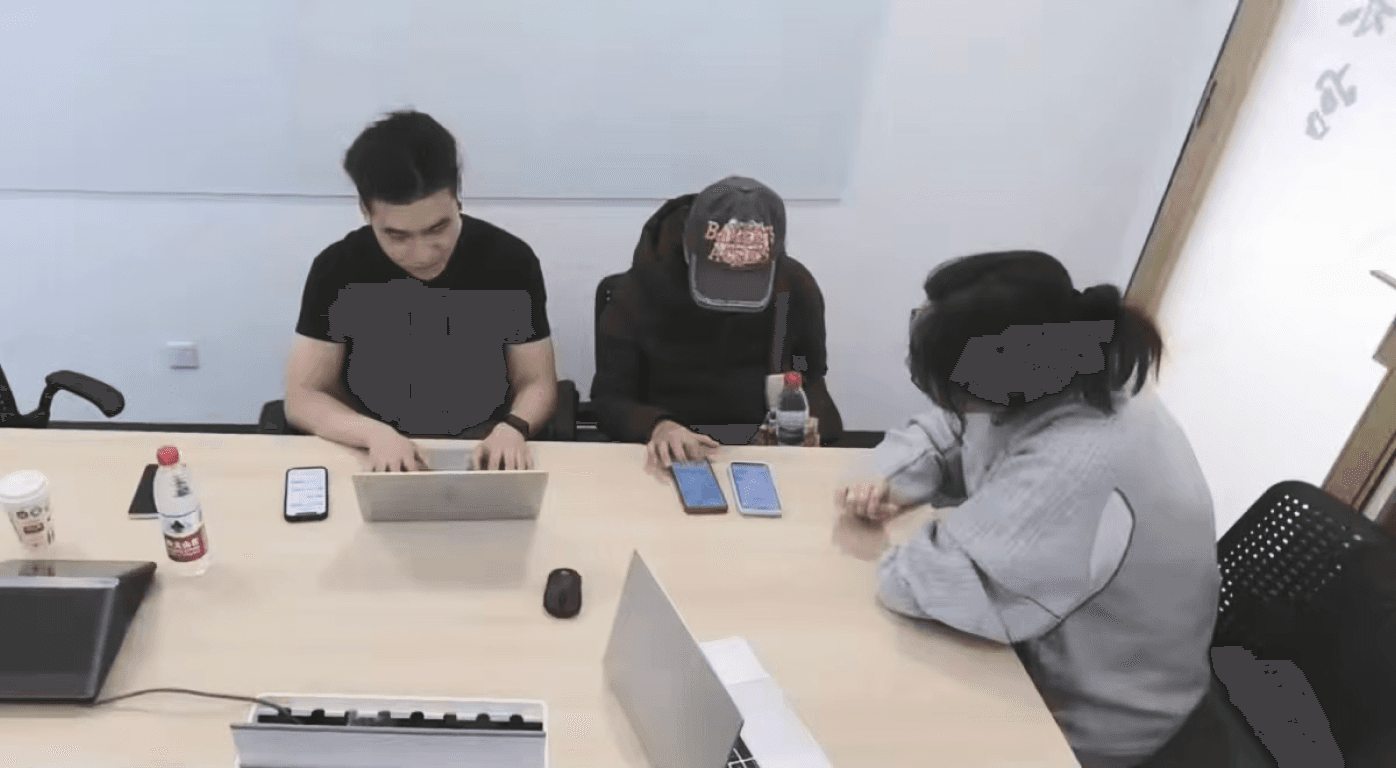
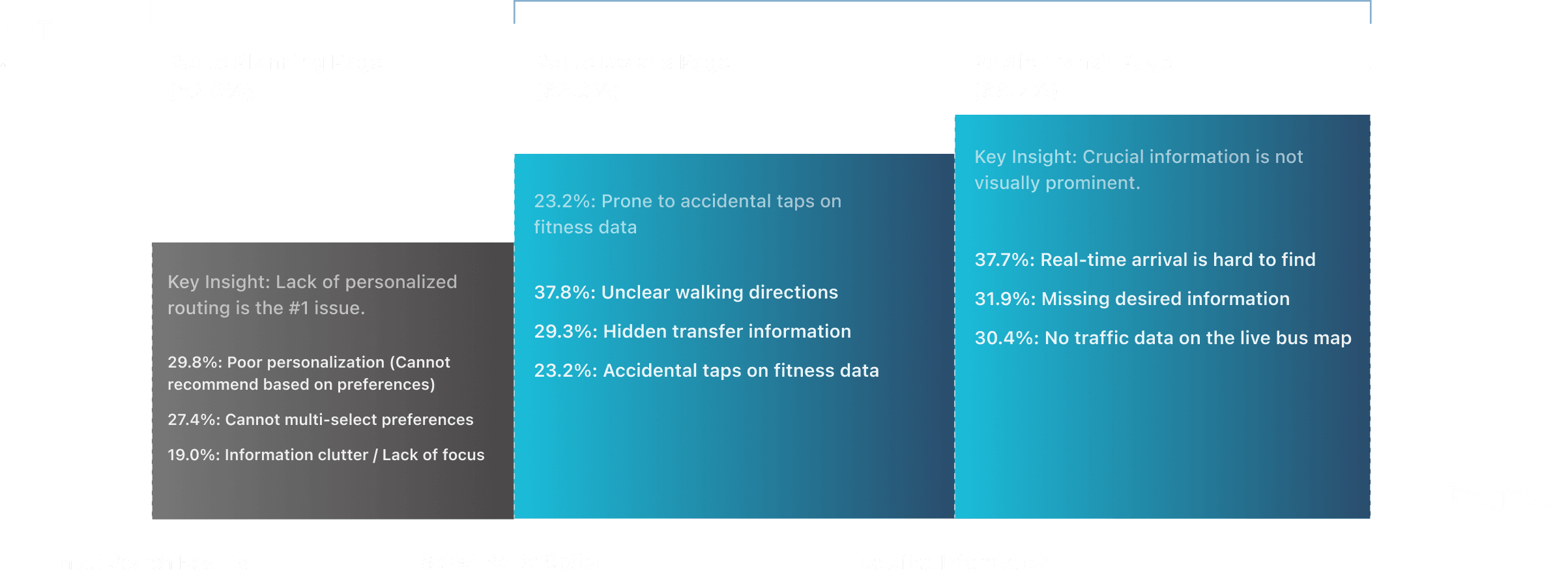
25.6% find routing unclear, and ~1/3 lack personalized recommendations.
This quarter, the previously prominent issue of 'Lack of preference-based routing' (29.8%) has escalated to the top complaint. Following closely are 'Inability to multi-select route preferences' (27.4%) and 'Unclear information/Lacking focus' (19.0%).
Challenge
Information Overload Disrupts Decision-Making
01
Information Overload
Excessive visual noise increases cognitive load during rushed commutes.
02
Tedious Filtering
Mechanical data lists force complex comparisons, causing decision paralysis.
03
Fragmented Journey
Service interruptions across screens or on the lock screen hinder access to critical information at key moments.
Design Principle
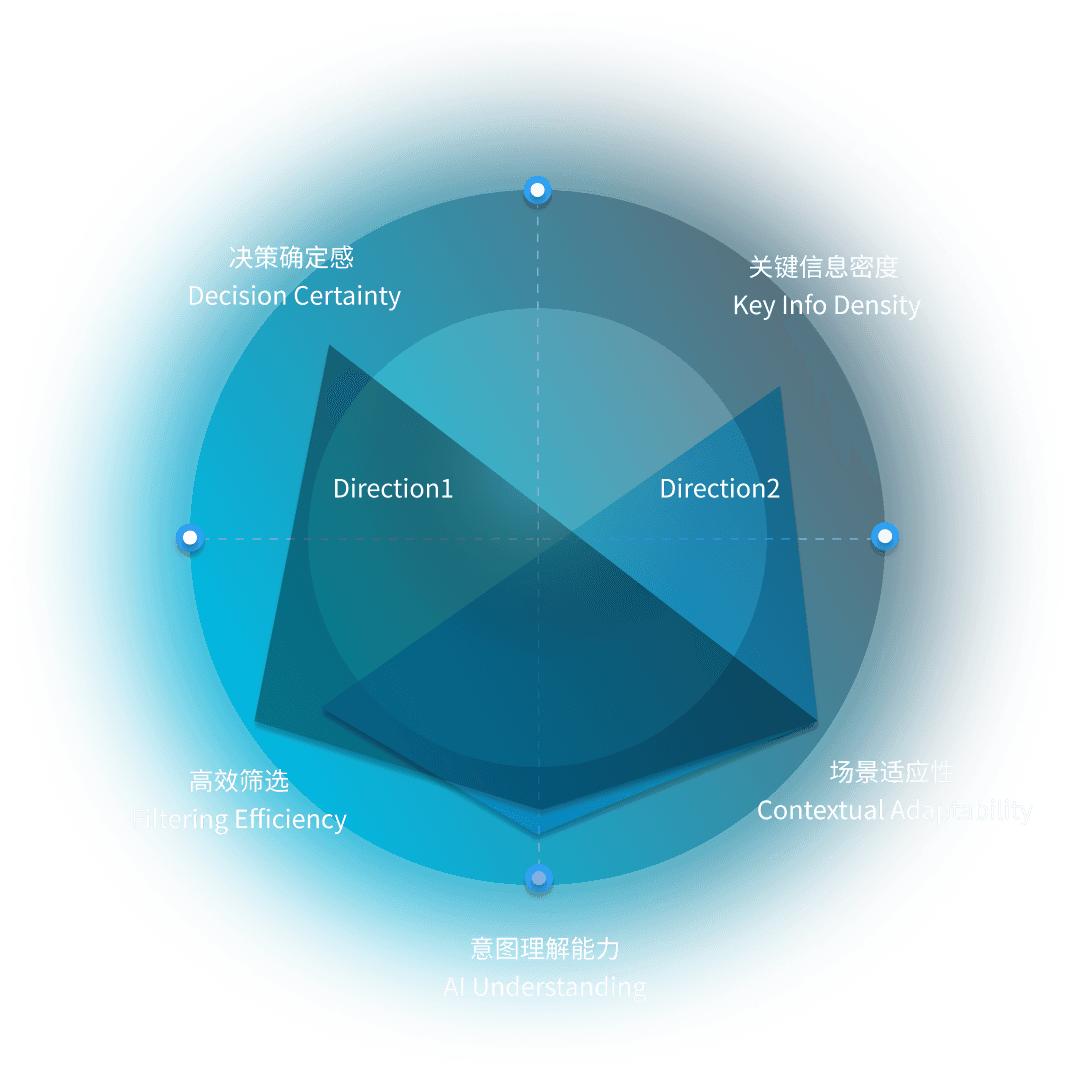
Designing for Information Clarity & Certainty
User
Reaction
Highlights
Restructuring Information Architecture for Precision and Readability
By deeply deconstructing the relationship between the List Page (for quick filtering) and the Detail Page (for setting expectations), we established new visual anchors and reshaped the user's visual flow.

Highlights
AI Query Handoff: From "Mechanical Search" to "Semantic Scenario Delivery"
LLM intent recognition replaces manual filtering with direct recommendations—shifting the UX from 'searching' to 'delivering'.
Ideation1
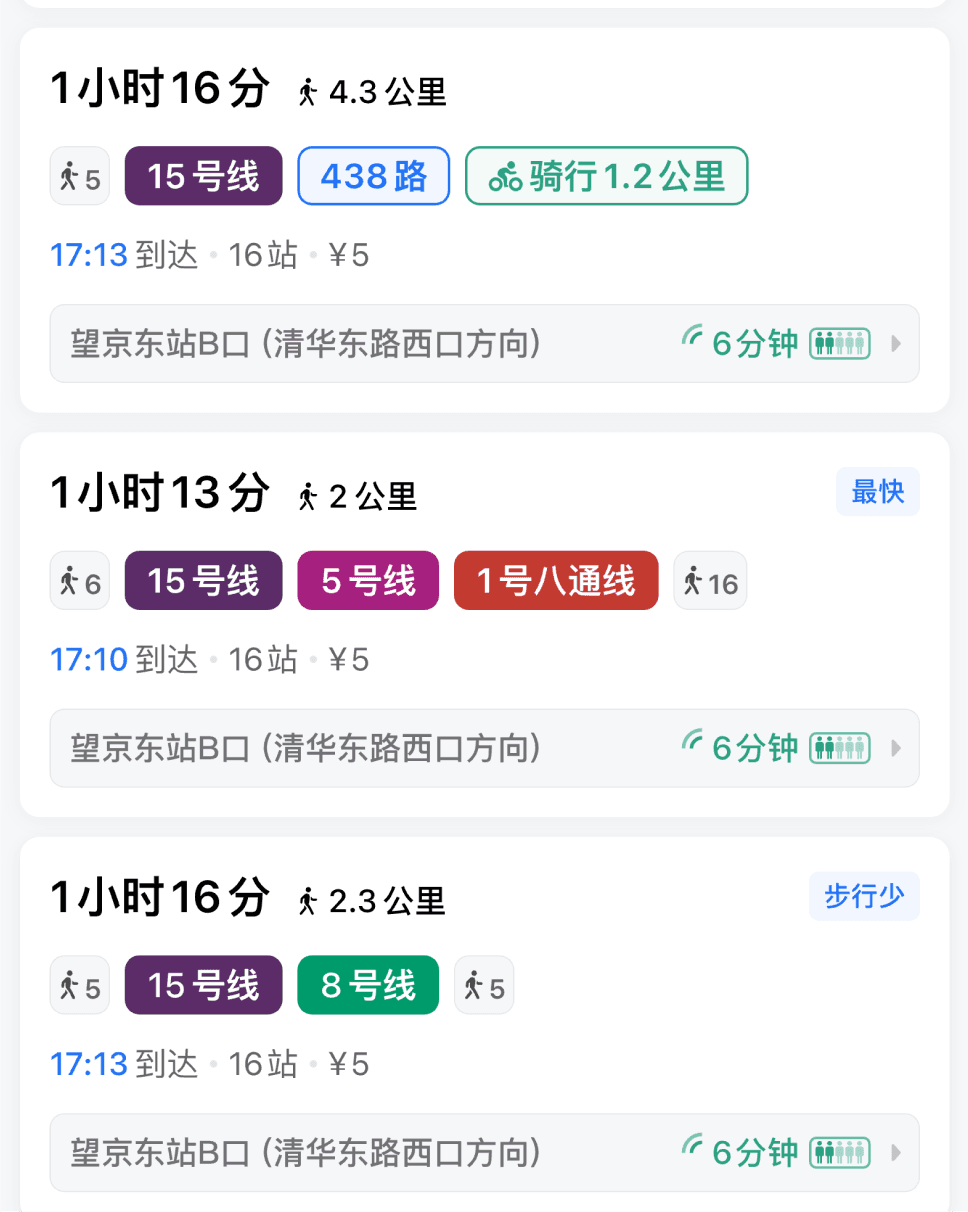
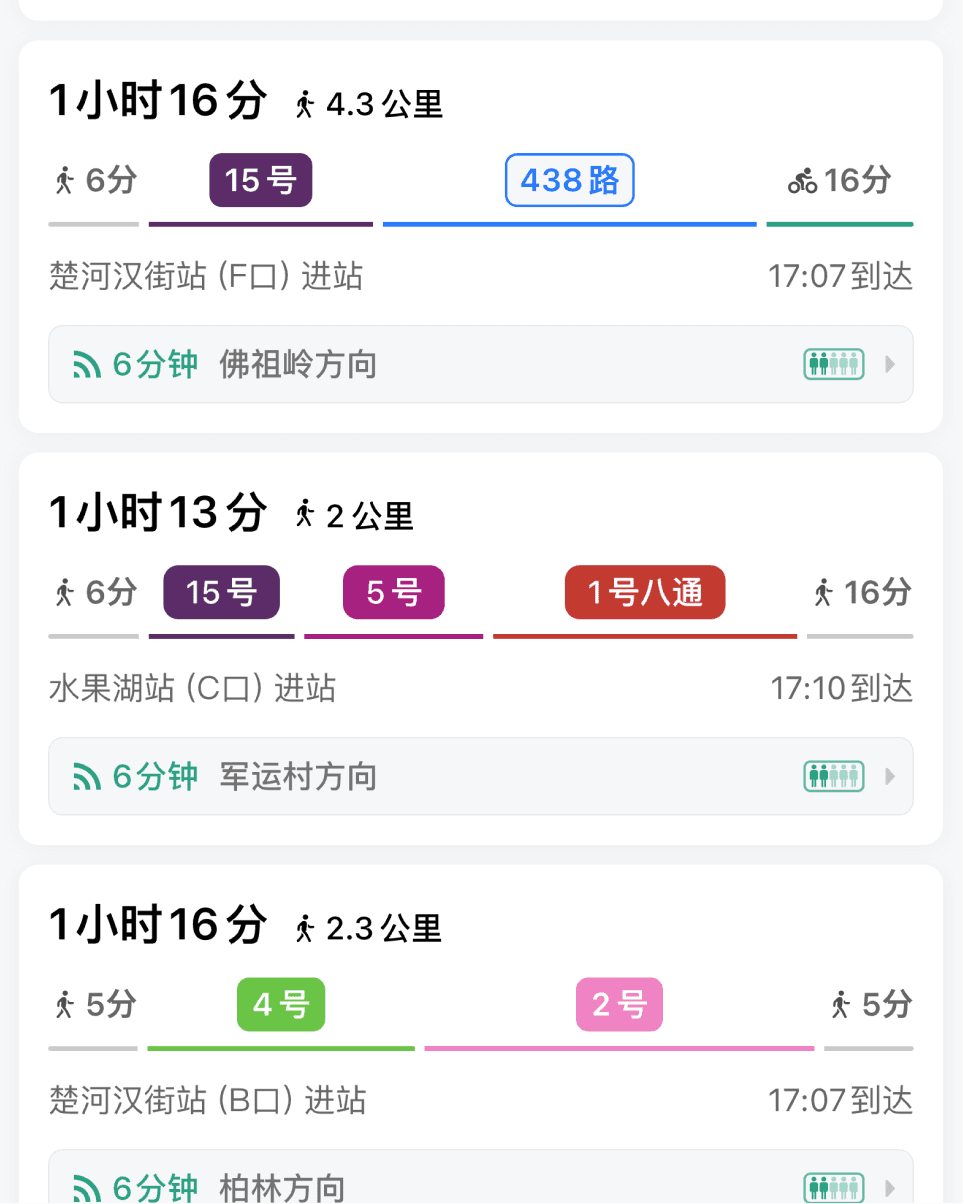
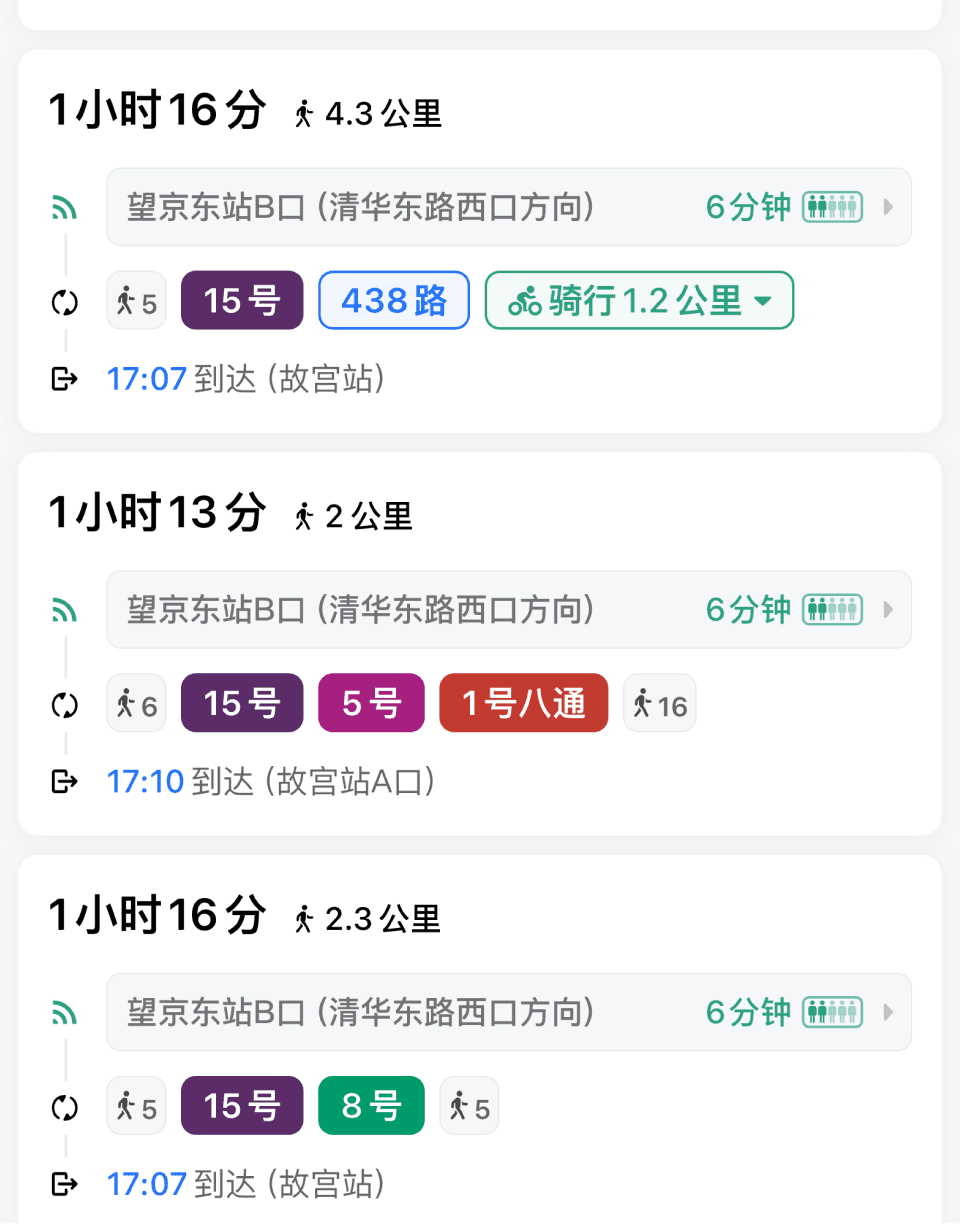
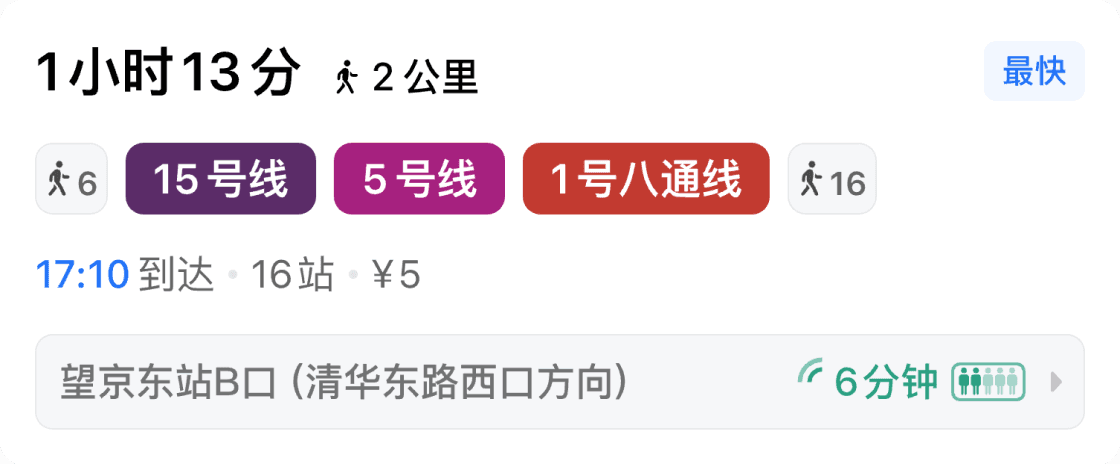
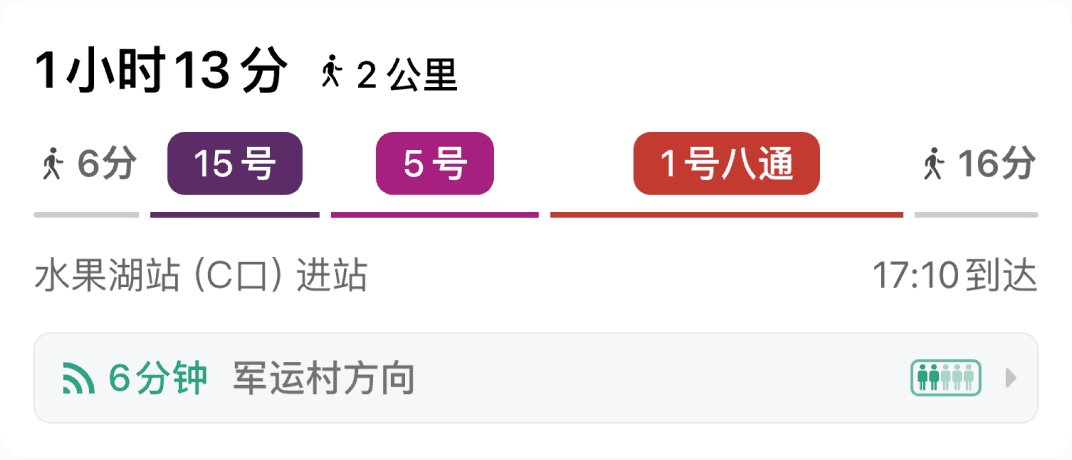
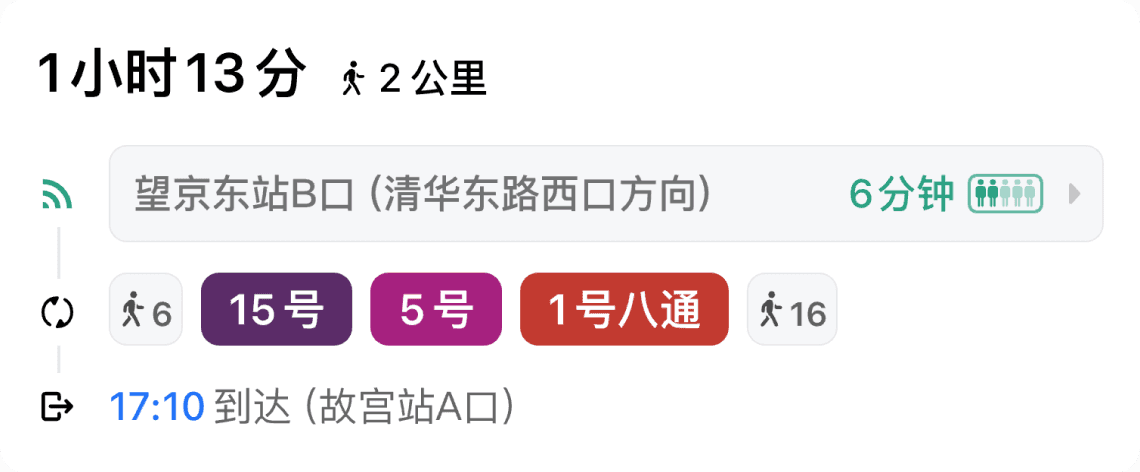
Lowering Cognitive Load Through Trip Card Redesign
Increased distance between numbers
and text


Ideation2
Designing a More Efficient Transit Decision Model via Interaction Architecture
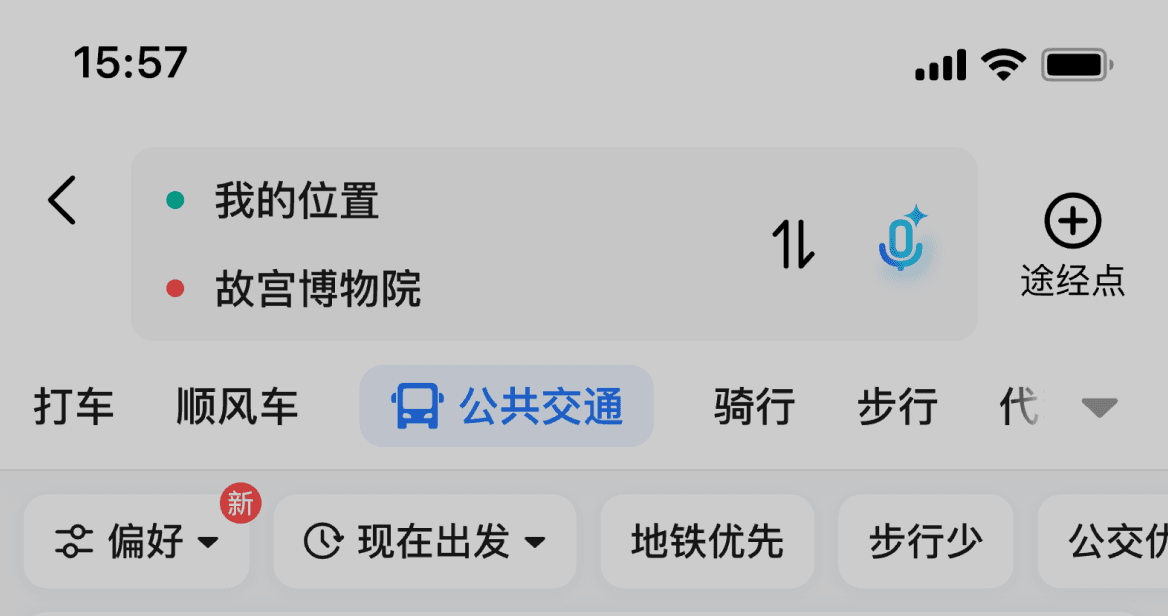
Evaluating the current solution based on visibility, comprehensibility, and psychological expectations:
1. Visibility: Can users identify the fastest route?
2. Comprehensibility: Can users understand why a route is recommended?
3. Expectation: Can users anticipate the next action? (e.g., "Tap to depart").
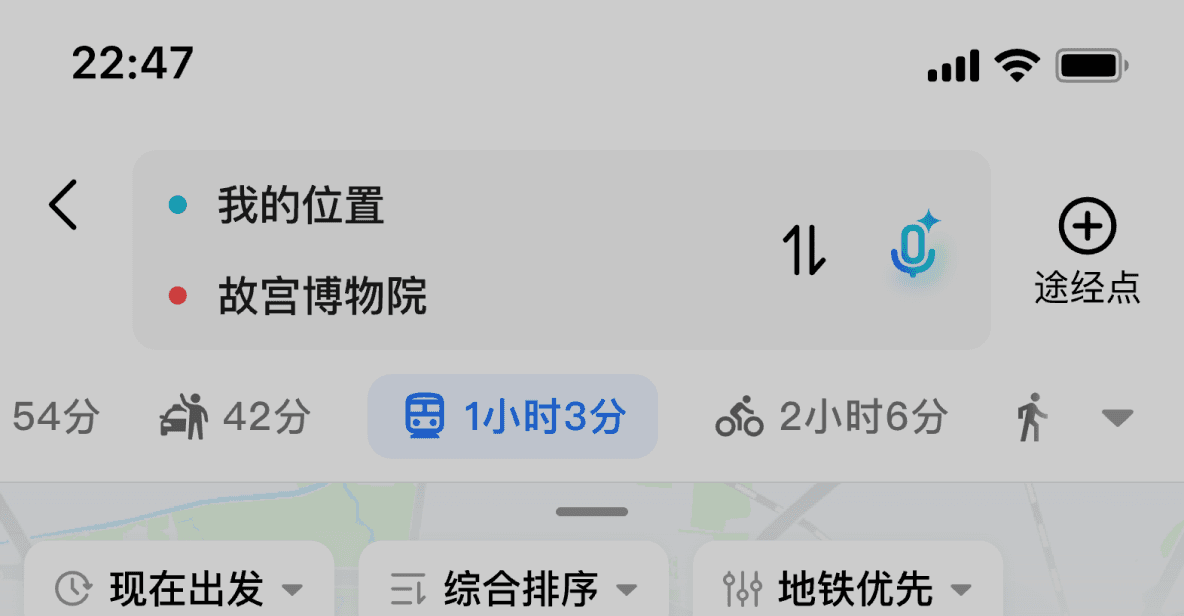
Option 1: Map-Card Linkage
Provides personalized options while centering map elements, ensuring comprehensive map context during decision-making.
Lower screen efficiency due to map.
Personalized transit experience.
Real map routes boost decision certainty.
Higher interaction cost to switch modes.
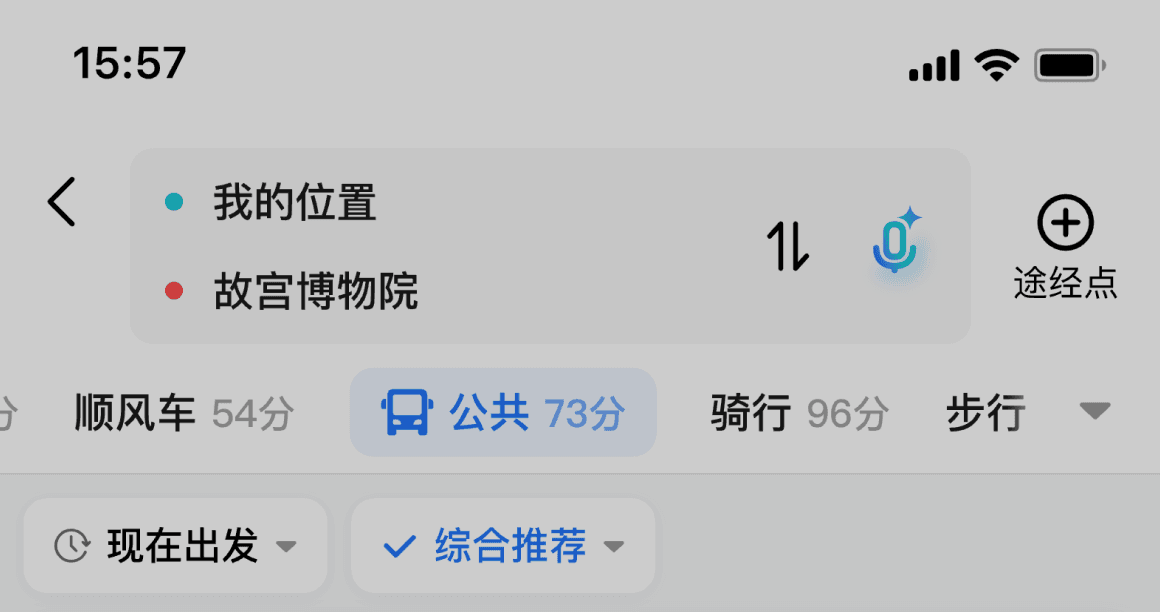
Option 2: List Layout
Traditional map interaction. Navigates to a list page after input, using filters for sorting and personalization
High information density and excellent screen efficiency.
Delivers a customized, personalized transit experience.
Requires navigating to a detail page for further map context.
Relatively low interaction cost.



AI Workflow
LLM "Fast/Slow Thinking" Handoff Model
Dual-engine architecture routing user intents for efficient frontend task distribution.
Ideation4
Designing a Smoother AI-Driven Decision Flow
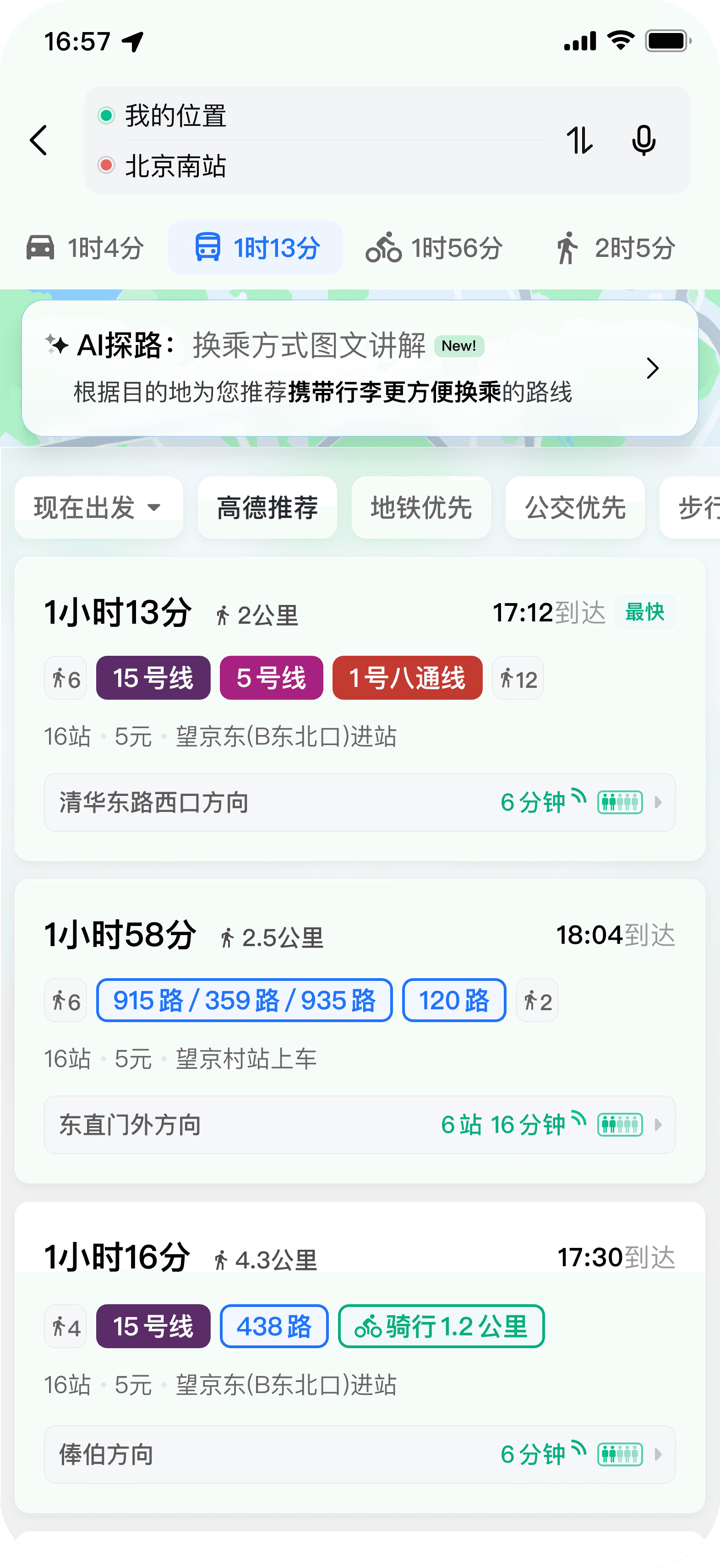
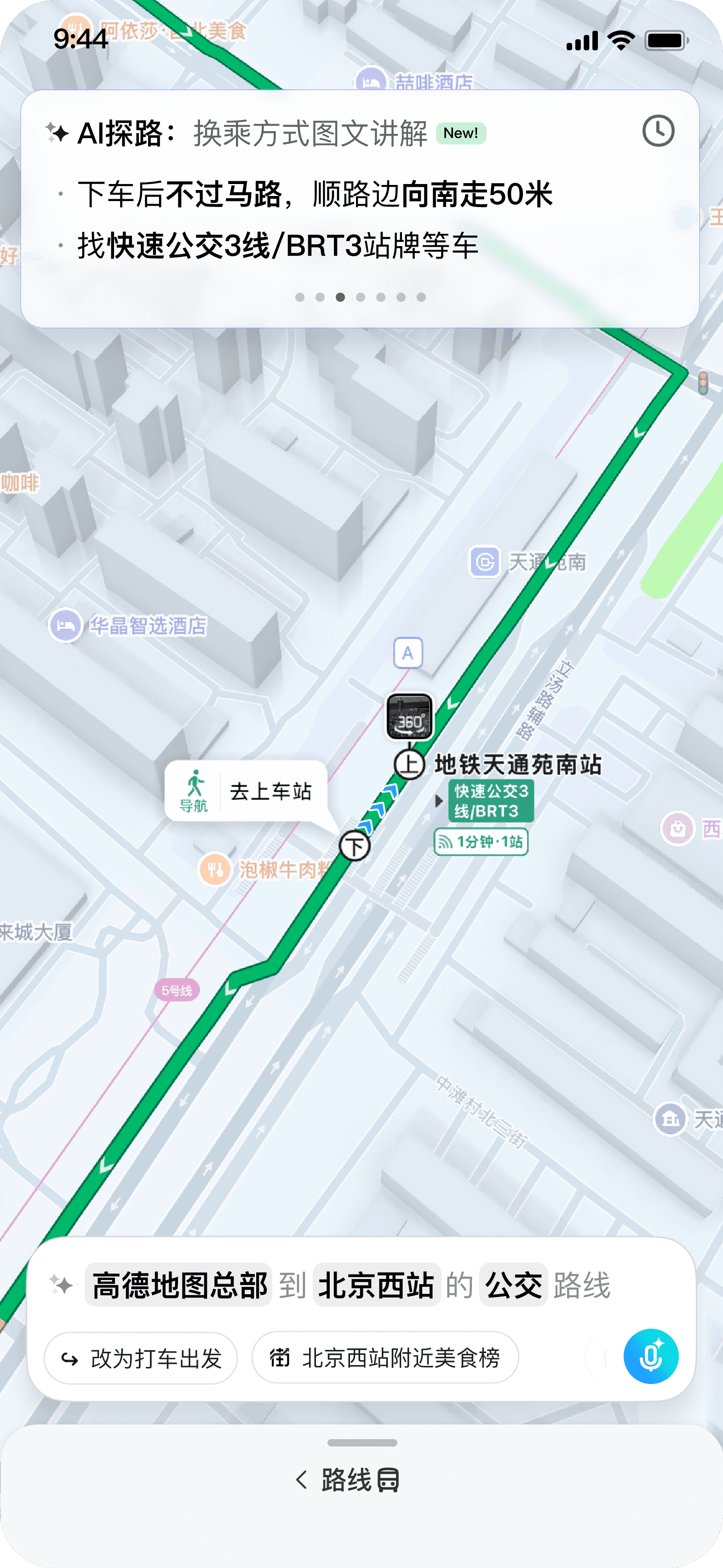
Option 1: Contextual Plug-in Banner
Inserts a lightweight "AI Scout" banner above the route list based on inferred intent , leading to a detailed "nanny-level" visual guide upon clicking.
High information capacity, combining detailed graphics with map linkage; easily introduces AI chat flow.
Increases interaction steps; the core answer is hidden behind a click.
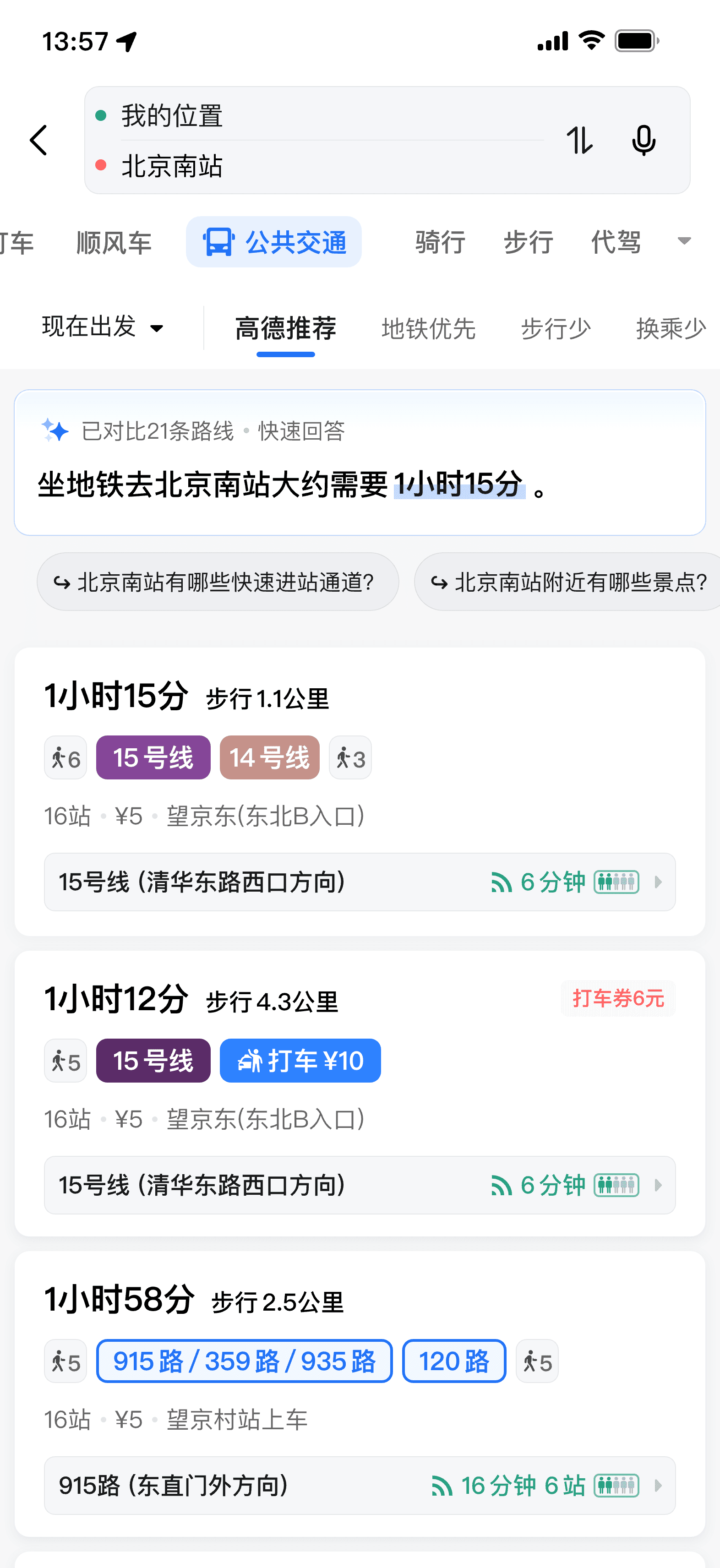
Option2:Concise Summary +
Follow-up Prompts
Minimizes cognitive load with extremely clear visual anchors.
The initial screen information is sparse; deeper queries require complex interactions.
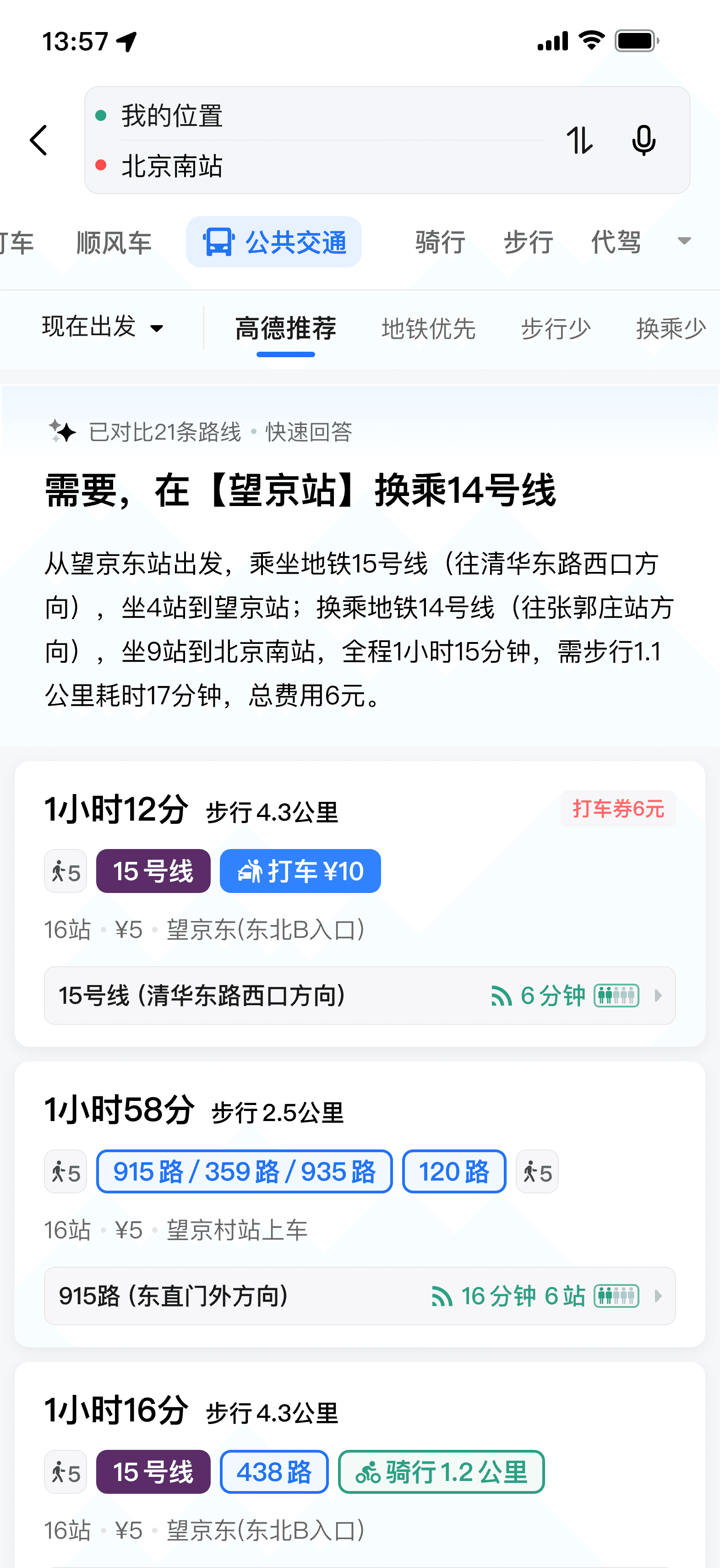
Reading dense text is highly inefficient compared to scanning structured cards.
Option 3: Natural Language Narrative
Generates a comprehensive text paragraph linking boarding, stations, transfers, duration, distance, and cost into a single narrative answer.
Highest information completeness; a "one-stop" answer for the user's query.
Learning
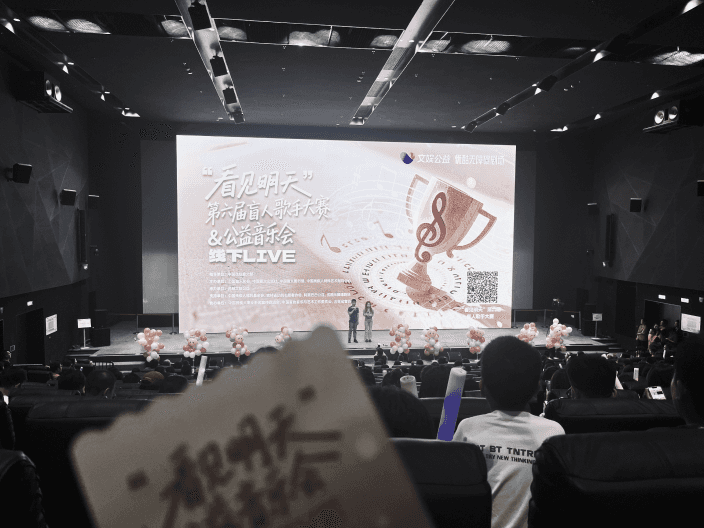
A rewarding six months of professional growth and personal enrichment. Thanks to everyone!
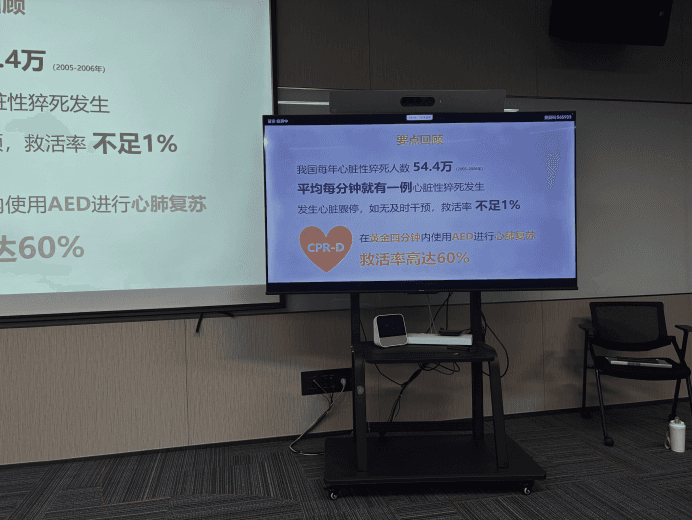
This experience did more than just boost my professional growth; it really added value to my life outside of work. I even managed to get my CPR certification through the training provided by the company.